Laisser un message
Si vous êtes intéressé par nos produits et souhaitez en savoir plus, veuillez laisser un message ici, nous vous répondrons dès que possible.

Comment fonctionne une pompe à incendie ? Explication du principe de fonctionnement de la pompe d’un camion de pompiers
Une pompe à incendie est le cœur du système d'acheminement de l'eau de chaque camion de pompiers. Qu'il s'agisse d'intervenir lors d'un incendie de bâtiment, d'une urgence industrielle, d'un incident dans un aéroport ou d'une opération en zone naturelle, la pompe à incendiesur un camion de pompiers est chargée de fournir de l'eau à haute pression aux tuyaux, aux lances-canons et aux systèmes à mousse.Sa conception à turbine centrifuge et son système entraîné par prise de force garantissent une pression stable et des débits élevés, augmentant directement l'efficacité de la lutte contre les incendies de plus de 40 %, tout en réduisant le temps d'intervention par 3. Elle peut être considérée comme le gardien invisible des opérations de lutte contre les incendies et la pierre angulaire technique des interventions d'urgence modernes.
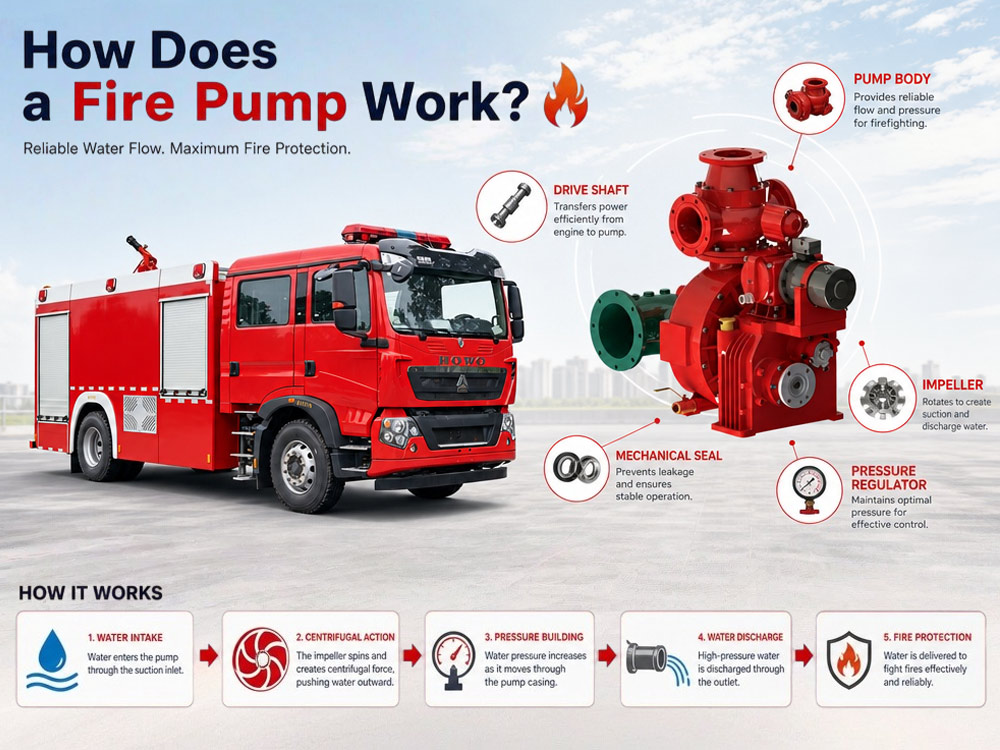
Découvrez le fonctionnement d'une pompe à incendie, notamment son principe de fonctionnement, ses principaux composants, le processus d'écoulement de l'eau, la génération de pression et ses applications. Découvrez comment les pompes des camions de pompiers assurent une alimentation en eau fiable pour la lutte contre les incendies et comment choisir la pompe adaptée à votre véhicule d'incendie.Apprenons-en davantage aujourd'hui.
1. Turbine : Le composant rotatif qui aspire l'eau et la projette vers l'extérieur par force centrifuge. Généralement fabriqué en bronze, en acier inoxydable ou en fonte.
2. Corps de pompe : Le boîtier qui contient la turbine et dirige l'écoulement de l'eau. Conçu pour convertir la vitesse en pression.
3. Prise de force (PTO) : La connexion mécanique qui transfère la puissance du moteur de la transmission du camion vers la pompe à incendie.
1. La puissance est transférée du moteur par l'intermédiaire de la prise de force
Le moteur du camion entraîne la prise de force, qui est reliée à l'arbre de la pompe. Lorsque l'opérateur active la prise de force, la puissance du moteur est redirigée pour faire tourner la turbine de la pompe à grande vitesse.
2. La turbine commence à tourner
La turbine tourne à 1 500–2 500 tr/min, aspirant l'eau dans la pompe par l'entrée d'aspiration. Les pales de la turbine en rotation créent une zone de basse pression au centre, attirant l'eau depuis le réservoir embarqué, la bouche d'incendie ou une source d'eau naturelle.
3. La force centrifuge augmente la pression de l'eau
Lorsque la turbine tourne, elle projette l'eau vers l'extérieur par force centrifuge. La vitesse de l'eau augmente lorsqu'elle se déplace du centre vers le bord extérieur de la turbine. Le corps de pompe convertit ensuite cette vitesse en pression, forçant l'eau à haute pression à sortir par l'orifice de refoulement.
4. L'eau à haute pression sort par l'orifice de refoulement
L'eau sous pression (généralement 0,8–1,2 MPa) sort par l'orifice de refoulement et est acheminée vers les tuyaux d'incendie, les lances-canons ou les systèmes de dosage de mousse pour les opérations de lutte contre les incendies.
La pompe à incendie peut aspirer de l'eau depuis trois sources :
Réservoir d'eau embarqué : La source d'eau principale pour l'attaque initiale. Capacité typique : 2 000–12 000 litres. Fournit une alimentation en eau immédiate à l'arrivée.
Bouche d'incendie : Raccordée par des tuyaux d'alimentation. Fournit une alimentation en eau continue pour les opérations prolongées. La pression de la bouche d'incendie aide la pompe à maintenir le débit.
Source d'eau naturelle (aspiration) : Lacs, rivières, étangs ou piscines. La pompe utilise un système d'amorçage pour éliminer l'air du tuyau d'aspiration avant l'aspiration. Hauteur d'aspiration théorique maximale au niveau de la mer : environ 10 mètres (33 pieds). Profondeur d'aspiration efficace : généralement 7–8 mètres.
Processus d'aspiration :
Raccorder le tuyau d'aspiration rigide à l'entrée de la pompe
Immerger la crépine à au moins 2–3 pieds sous la surface de l'eau
Activer l'amorceur pour éliminer l'air du tuyau et de la pompe
Le vide se forme, la pression atmosphérique pousse l'eau vers le haut
L'eau remplit la pompe, puis la pompe centrifuge la met sous pression
Entrée d'aspiration : L'endroit où l'eau entre dans la pompe. Taille typique : DN100–DN150. Équipée d'une crépine pour empêcher les débris d'entrer.
Sortie de refoulement :Là où l’eau sous pression sort. Taille typique : DN65–DN80 (sorties standard). Équipée de vannes pour contrôler le débit vers les tuyaux ou les lances. Plusieurs sorties permettent une utilisation simultanée.
Roue :Le composant rotatif qui crée le débit d’eau. Convertit l’énergie mécanique en énergie cinétique. Généralement fabriquée en bronze (résistant à la corrosion), en acier inoxydable (durable et longue durée de vie) ou en fonte (économique pour les applications standard).
Corps de pompe :Le boîtier qui dirige le débit d’eau. Conçu pour convertir la vitesse en pression. Modèles courants : corps de pompe volute (forme en spirale pour un écoulement fluide) et corps de pompe à diffuseur (pour une efficacité supérieure).
Système d’amorçage :Élimine l’air de la pompe et du tuyau d’aspiration avant l’aspiration. Les types incluent :
Amorceur à vide :Conception à palettes rotatives ou à piston. Rapide et efficace. Le plus courant dans les camions de pompiers modernes.
Amorceur par échappement :Utilise les gaz d’échappement du moteur pour créer un vide. Simple mais moins efficace.
Amorceur électrique :Entraîné par un moteur. Peut amorcer sans rotation de la pompe. Protège le joint mécanique contre les dommages dus au fonctionnement à sec.
Soupape de décharge de pression :Empêche la surpression. S’ouvre lorsque la pression dépasse la limite définie. Protège les tuyaux, la pompe et les pompiers.
Régulateur de pression :Maintient automatiquement la pression définie. Ajuste le régime moteur pour compenser les variations de débit. Réduit la charge de travail de l’opérateur. Disponible en mode pression (maintient une pression préréglée) et en mode régime (maintient une vitesse moteur préréglée).
PTO (prise de force) :La connexion entre le moteur et la pompe. Transfère la puissance du moteur pour entraîner la pompe. Les camions de pompiers utilisent généralement une PTO sandwich (montée entre le moteur et la transmission) pour une puissance maximale.
| Type de pompe | Avantages | Applications typiques |
|---|---|---|
| Pompe centrifuge d’incendie à un étage | Débit élevé, conception simple, économique | Camions de pompiers municipaux |
| Pompe d’incendie à deux étages | Pression plus élevée, modes commutables | Lutte contre les incendies dans les immeubles de grande hauteur, longues lignes de tuyaux |
| Pompe d’incendie montée au milieu du châssis | Meilleur équilibre, fonctionnement stable | Véhicules d’incendie standard |
| Pompe d’incendie montée à l’arrière | Maintenance plus facile, meilleur refroidissement | Camions d’aéroport et industriels |
| Élément de comparaison | Pompe d’incendie | Pompe à eau standard |
|---|---|---|
| Pression de fonctionnement | Élevée (0,8–2,5 MPa) | Inférieure (0,2–0,6 MPa) |
| Débit | Élevé (1 200–6 000 L/min) | Modéré (500–2 000 L/min) |
| Fonctionnement continu | Oui (conçue pour une utilisation prolongée) | Dépend du modèle |
| Entraînée par prise de force | Oui | Généralement non |
| Conformité aux normes de lutte contre l'incendie | Oui (certifiée NFPA, EN, GB) | Non |
| Domaines d'application | Lutte contre l'incendie et sauvetage | Alimentation en eau industrielle, agricole et domestique |
| Application | Pompe recommandée | Raison |
|---|---|---|
| Lutte contre l'incendie municipale | Monocellulaire (1 200–3 000 L/min) | Rentable, suffisante pour la plupart des incendies |
| Bâtiments de grande hauteur | À deux étages (2 000–4 000 L/min) | Pression plus élevée pour le relevage vertical |
| Usines pétrochimiques | À deux étages (3 000–6 000 L/min) | Débit élevé, pression adaptée aux incendies industriels |
| Sauvetage en cas d'accident d'avion dans les aéroports | Montée à l'arrière (4 000–6 000 L/min) | Débit élevé, entretien plus facile |
| Lutte contre les incendies de végétation | Monocellulaire (1 000–2 000 L/min) | Légère, portable |
La pompe à incendie crée de la pression grâce à la force centrifuge. Lorsque la roue tourne, elle aspire l'eau vers le centre et la projette vers l'extérieur à grande vitesse. Le corps de pompe transforme cette eau à grande vitesse en pression en la ralentissant.
Facteurs affectant la pression :
Vitesse de la roue :Une rotation plus rapide = une pression plus élevée. La vitesse de la roue est directement proportionnelle au régime du moteur.
Régime du moteur :Une vitesse moteur plus élevée = une roue plus rapide = une pression plus élevée. Les opérateurs contrôlent la pression en ajustant l'accélérateur du moteur ou en utilisant le régulateur de pression.
Conception de la pompe :Les pompes à deux étages peuvent atteindre une pression plus élevée que les pompes à un seul étage en utilisant deux roues en série.
Diamètre de la conduite :Un diamètre plus petit = une pression plus élevée mais un débit plus faible. Un diamètre plus grand = une pression plus faible mais un débit plus élevé. L'opérateur doit équilibrer la pression et le débit en fonction de la tâche de lutte contre l'incendie.
Source d'eau :Une alimentation en eau suffisante est essentielle pour maintenir la pression. Une alimentation insuffisante entraîne une baisse de pression.
1. La pompe ne s'amorce pas
Causes possibles : Fuite d'air dans le tuyau d'aspiration, crépine obstruée, système d'amorçage défaillant.
Solutions : Vérifier et resserrer tous les raccordements du tuyau d'aspiration ; nettoyer la crépine ; inspecter le système d'amorçage (pompe à vide ou amorceur électrique) et le réparer si nécessaire.
2. Faible pression d'eau
Causes possibles : Crépine obstruée, régime moteur insuffisant, roue usée, présence d'air dans le système.
Solutions : Nettoyer la crépine ; augmenter la vitesse du moteur ; inspecter l'usure de la roue et la remplacer si nécessaire ; vérifier les fuites d'air et réamorcer.
3. Cavitation
Formation : La cavitation se produit lorsque la pompe ne reçoit pas assez d'eau. La roue tourne dans un mélange d'eau et de bulles de vapeur. Lorsque ces bulles s'effondrent, elles créent des ondes de choc qui endommagent la roue et provoquent de fortes fluctuations de pression.
Comment l'éviter : Ne jamais faire fonctionner la pompe plus vite que ce que l'alimentation en eau peut fournir ; surveiller la pression d'aspiration ; réduire la vitesse de la pompe si le vide est trop élevé ; s'assurer que la crépine n'est pas obstruée.
4. Fuite d'eau
Points à vérifier : Vérifier tous les joints et garnitures ; inspecter le corps de pompe pour détecter des fissures ; s'assurer que les vannes de vidange sont fermées ; remplacer immédiatement les joints usés.
5. Surchauffe
Causes : Fonctionnement de la pompe à sec, refroidissement insuffisant, fonctionnement prolongé sans débit d'eau.
Conseils d'entretien : Ne jamais faire fonctionner la pompe sans eau ; s'assurer que les conduites de refroidissement sont dégagées ; laisser la pompe refroidir entre les opérations ; vérifier régulièrement la soupape de décharge thermique.
» VIII. Étude de cas réelle : modernisation de la pompe d'un service d'incendie municipal
Contexte :
Un service d'incendie municipal disposant d'une flotte de camions de pompiers vieillissants devait moderniser les systèmes de pompage de trois véhicules d'intervention principaux. Les pompes existantes avaient des difficultés à maintenir la pression lors des opérations de lutte contre les incendies dans les immeubles de grande hauteur et nécessitaient fréquemment des réparations.
Défi :
Pression instable à des hauteurs supérieures à 50 mètres
Aspiration lente depuis des sources d'eau naturelles (temps d'amorçage >45 secondes)
Faible débit à haute pression
Défaillances fréquentes des joints et usure de la roue
Solution :
Pompe d'incendie CB10/60 (60 L/s à 1,0 MPa)
Amorceur électrique à vide (améliore la vitesse d'amorçage)
Régulateur de pression automatique (maintient une pression stable)
Joints et roulements de pompe améliorés
Nouveaux tuyaux d'aspiration avec crépines plus grandes
Résultats :
| Métrique | Avant | Après |
|---|---|---|
| Pression à une hauteur de 50 m | 0,6 MPa | 0,9 MPa |
| Temps d'amorçage | 45 secondes | 18 secondes |
| Débit à pleine pression | 40 L/s | 55 L/s |
| Remplacements de joints par an | 4 | 0 |
La pression a augmenté de 25 %, le temps d'aspiration a été réduit de 35 %, l'efficacité de la lutte contre les incendies s'est considérablement améliorée et les coûts de maintenance ont diminué de 60 %. Le service a signalé des temps de réponse plus rapides et un pompage plus fiable lors des incendies de grande ampleur.
1. Déterminer le débit requis
| Application | Débit recommandé |
|---|---|
| Lutte contre les incendies municipaux | 30–60 L/s |
| Parcs industriels | 60–100 L/s |
| Secours en cas d'accident d'avion dans les aéroports | 100+ L/s |
| Lutte contre les incendies de végétation | 20–40 L/s |
| Immeubles de grande hauteur | 40–80 L/s |
2. Déterminer la pression requise
| Application | Pression recommandée |
|---|---|
| Lutte contre les incendies municipaux | 0,8–1,0 MPa |
| Parcs industriels | 1,0–1,2 MPa |
| Usines pétrochimiques | 1,2–1,4 MPa |
| Secours incendie aéroportuaire | 1,0–1,2 MPa |
| Bâtiments de grande hauteur | 1,5–2,5 MPa |
3. Prendre en compte la source d'eau
Alimentation par borne d'incendie : Une pompe à un étage est suffisante. Aucun amorçage requis.
Réservoir embarqué : À un étage ou à deux étages. Amorçage requis pour l'aspiration.
Eau naturelle (aspiration) : Nécessite un dispositif d'amorçage à vide. Deux étages pour une grande hauteur d'élévation.
4. Taille et configuration du camion de pompiers
| Châssis | Pompe recommandée |
|---|---|
| 4×2 | À un étage, 1 200–2 000 L/min |
| 4×4 | À un étage, 2 000–3 000 L/min |
| 6×4 | À deux étages, 3 000–4 500 L/min |
| 8×4 | À deux étages, 4 000–6 000 L/min |
Q : Qu'est-ce qu'une pompe d'incendie ?
R : Une pompe d'incendie est une pompe centrifuge entraînée par le moteur du camion via un système de prise de force (PTO). Elle aspire l'eau des réservoirs embarqués, des bornes d'incendie ou des sources d'eau naturelles, augmente la pression de l'eau en faisant tourner une roue à aubes, et fournit de l'eau à haute pression aux tuyaux ou aux lances monitor pour les opérations de lutte contre l'incendie.
Q : Comment une pompe d'incendie augmente-t-elle la pression de l'eau ?
R : La roue à aubes tourne à grande vitesse (1 500–2 500 tr/min), aspirant l'eau au centre et la projetant vers l'extérieur par force centrifuge. Le corps de pompe convertit cette eau à grande vitesse en pression en la ralentissant. Une vitesse de roue à aubes plus élevée = une pression plus élevée.
Q : Une pompe d'incendie est-elle identique à une pompe à eau standard ?
R : Non. Les pompes d'incendie sont conçues pour une pression plus élevée (0,8–2,5 MPa), des débits plus importants (1 200–6 000 L/min) et un fonctionnement d'urgence continu. Les pompes à eau standard fonctionnent à une pression plus faible et ne sont pas conçues pour la lutte contre l'incendie ni pour les systèmes entraînés par prise de force (PTO).
Q : Qu'est-ce qui alimente la pompe d'un camion de pompiers ?
R : Le moteur du camion de pompiers alimente la pompe d'incendie via un système de prise de force (PTO). Lorsque l'opérateur enclenche la prise de force, la puissance du moteur est redirigée pour faire tourner la roue à aubes de la pompe. Aucun moteur séparé n'est nécessaire.
Q : Pourquoi une pompe d'incendie a-t-elle besoin d'un amorceur ?
R : Un amorceur élimine l'air de la pompe et du tuyau d'aspiration avant l'aspiration depuis un lac, une rivière ou un étang. Les pompes centrifuges ne peuvent pas déplacer l'eau s'il y a de l'air dans le système. L'amorceur crée un vide, permettant à la pression atmosphérique de pousser l'eau dans la pompe.
Q : Quelle est la différence entre une pompe d'incendie à un étage et une pompe d'incendie à deux étages ?
R : Une pompe à un étage possède une seule roue et fournit un débit élevé à une pression modérée. Une pompe à deux étages possède deux roues en série et peut fournir une pression plus élevée. Les pompes à deux étages peuvent basculer entre le mode volume (débit élevé) et le mode pression (haute pression).
Q : Une pompe d'incendie peut-elle aspirer de l'eau depuis une rivière ?
R : Oui. Une pompe d'incendie peut aspirer de l'eau depuis des rivières, des lacs, des étangs et des piscines grâce à un procédé appelé aspiration. L'amorceur retire l'air du tuyau d'aspiration et de la pompe, créant un vide. La pression atmosphérique pousse l'eau vers le haut dans la pompe. Hauteur d'aspiration pratique maximale : environ 7 à 8 mètres.
Q : Qu'est-ce qui provoque la cavitation d'une pompe d'incendie ?
R : La cavitation se produit lorsque la pompe ne reçoit pas suffisamment d'eau. La roue tourne dans un mélange d'eau et de bulles de vapeur. Lorsque ces bulles s'effondrent, elles créent des ondes de choc qui endommagent la roue. La cavitation est causée par le fonctionnement de la pompe à une vitesse supérieure à la capacité d'alimentation en eau, des crépines obstruées ou une hauteur d'aspiration excessive.
Q : À quelle fréquence une pompe d'incendie doit-elle être entretenue ?
R : Contrôles quotidiens (bruit, vibrations, fuites), tests hebdomadaires (amorceur, régulateur de pression), inspections mensuelles (roue, roulements, soupape de décharge), tests complets de débit annuels et essais de pression hydrostatique. Un entretien régulier prévient les défaillances inattendues en cas d'urgence.
Q : Comment choisir la bonne pompe d'incendie pour mon camion de pompiers ?
R : Tenez compte du débit requis (en fonction des risques d'incendie), des exigences de pression (en fonction de la hauteur des bâtiments), de la source d'eau (borne d'incendie, réservoir ou source naturelle), du châssis du camion de pompiers (4×2, 4×4, 6×4, 8×4), de la marque et de la fiabilité de la pompe, ainsi que du support d'entretien et de service. La pompe doit correspondre à la puissance du moteur du véhicule et à la configuration de la prise de force.
Les pompes d'incendie utilisent la force centrifuge pour augmenter la pression de l'eau. La roue aspire l'eau et la projette vers l'extérieur, transformant la vitesse en pression.
La plupart des pompes de camions de pompiers sont entraînées par un système de prise de force (Power Take-Off). La puissance du moteur est redirigée vers la pompe, aucun moteur séparé n'est nécessaire.
L'eau peut provenir de réservoirs embarqués, de bornes d'incendie ou de sources d'eau ouvertes. L'aspiration depuis des sources naturelles nécessite un amorceur pour retirer l'air du tuyau d'aspiration.
Les systèmes d'amorçage retirent l'air avant l'aspiration depuis des sources d'eau naturelles. Les amorceurs à vide sont les plus courants, les amorceurs électriques offrant une protection pour les joints mécaniques.
Les performances de la pompe dépendent du débit, de la pression, de la taille de la roue et de la puissance du moteur. Adapter la pompe à la tâche de lutte contre l'incendie est essentiel.
Un entretien approprié (quotidien, hebdomadaire, mensuel, annuel) améliore la fiabilité et la durée de vie. Des tests réguliers préviennent les défaillances inattendues en cas d'urgence.
Comprendre le fonctionnement de la pompe aide les acheteurs à choisir les bonnes spécifications pour leur camion de pompiers. La pompe doit correspondre au châssis, à la prise de force et aux exigences de lutte contre l'incendie.


Vous pouvez être intéressé par les informations suivantes
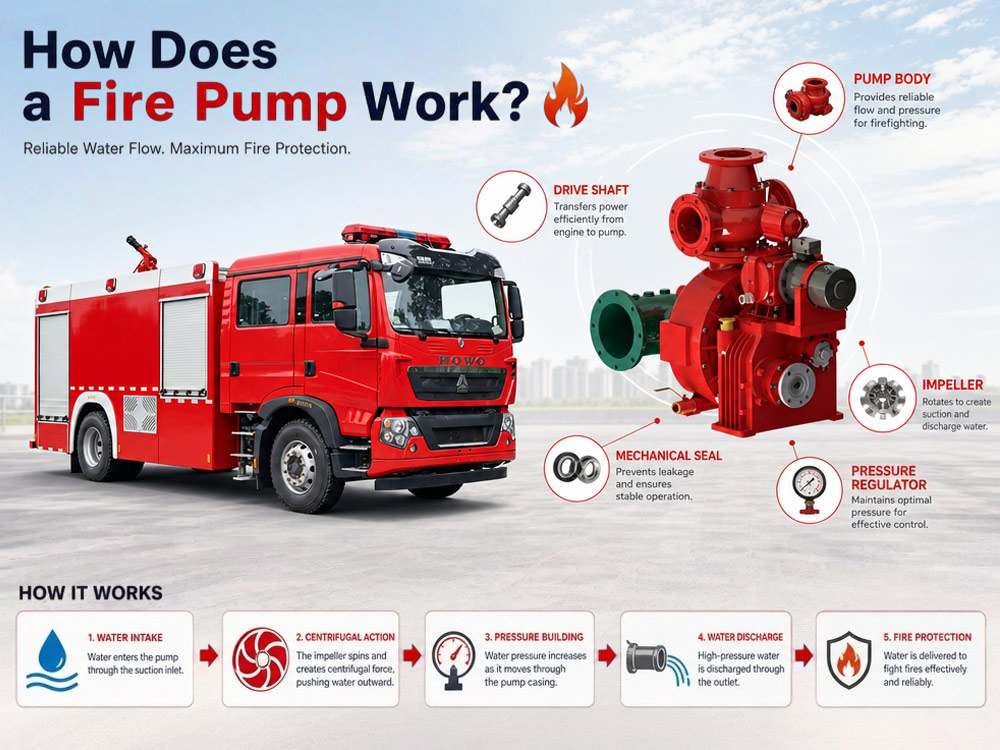
Une pompe à incendie est le cœur du système d'acheminement de l'eau de chaque camion de pompiers. Qu'il s'agisse d'intervenir lors d'un incendie de bâtiment, d'une urgence industrielle, d'un incident dans un aéroport ou d'une opération en zone naturelle, la pompe à incendiesur un camion de pompiers est chargée de fournir de l'eau à haute pression aux tuyaux, aux lances-canons et aux systèmes à mousse.Sa conception à turbine centrifuge et son système entraîné par prise de force garantissent une pression stable et des débits élevés, augmentant directement l'efficacité de la lutte contre les incendies de plus de 40 %, tout en réduisant le temps d'intervention par 3. Elle peut être considérée comme le gardien invisible des opérations de lutte contre les incendies et la pierre angulaire technique des interventions d'urgence modernes. Découvrez le fonctionnement d'une pompe à incendie, notamment son principe de fonctionnement, ses principaux composants, le processus d'écoulement de l'eau, la génération de pression et ses applications. Découvrez comment les pompes des camions de pompiers assurent une alimentation en eau fiable pour la lutte contre les incendies et comment choisir la pompe adaptée à votre véhicule d'incendie.Apprenons-en davantage aujourd'hui. » I. Tout d'abord, nous devons connaître les trois composants clés du système de pompe à incendie : 1. Turbine : Le composant rotatif qui aspire l'eau et la projette vers l'extérieur par force centrifuge. Généralement fabriqué en bronze, en acier inoxydable ou en fonte. 2. Corps de pompe : Le boîtier qui contient la turbine et dirige l'écoulement de l'eau. Conçu pour convertir la vitesse en pression. 3. Prise de force (PTO) : La connexion mécanique qui transfère la puissance du moteur de la transmission du camion vers la pompe à incendie. » II. Après avoir identifié les composants clés, le principe de fonctionnement fondamental de la pompe à incendie est le suivant : 1. La puissance est transférée du moteur par l'intermédiaire de la prise de force Le moteur du camion entraîne la prise de force, qui est reliée à l'arbre de la pompe. Lorsque l'opérateur active la prise de force, la puissance du moteur est redirigée pour faire tourner la turbine de la pompe à grande vitesse. 2. La turbine commence à tourner La turbine tourne à 1 500–2 500 tr/min, aspirant l'eau dans la pompe par l'entrée d'aspiration. Les pales de la turbine en rotation créent une zone de basse pression au centre, attirant l'eau depuis le réservoir embarqué, la bouche d'incendie ou une source d'eau naturelle. 3. La force centrifuge augmente la pression de l'eau Lorsque la turbine tourne, elle projette l'eau vers l'extérieur par force centrifuge. La vitesse de l'eau augmente lorsqu'elle se déplace du centre vers le bord extérieur de la turbine. Le corps de pompe convertit ensuite cette vitesse en pression, forçant l'eau à haute pression à sortir par l'orifice de refoulement. 4. L'eau à haute pression sort par l'orifice de refoulement L...
Détails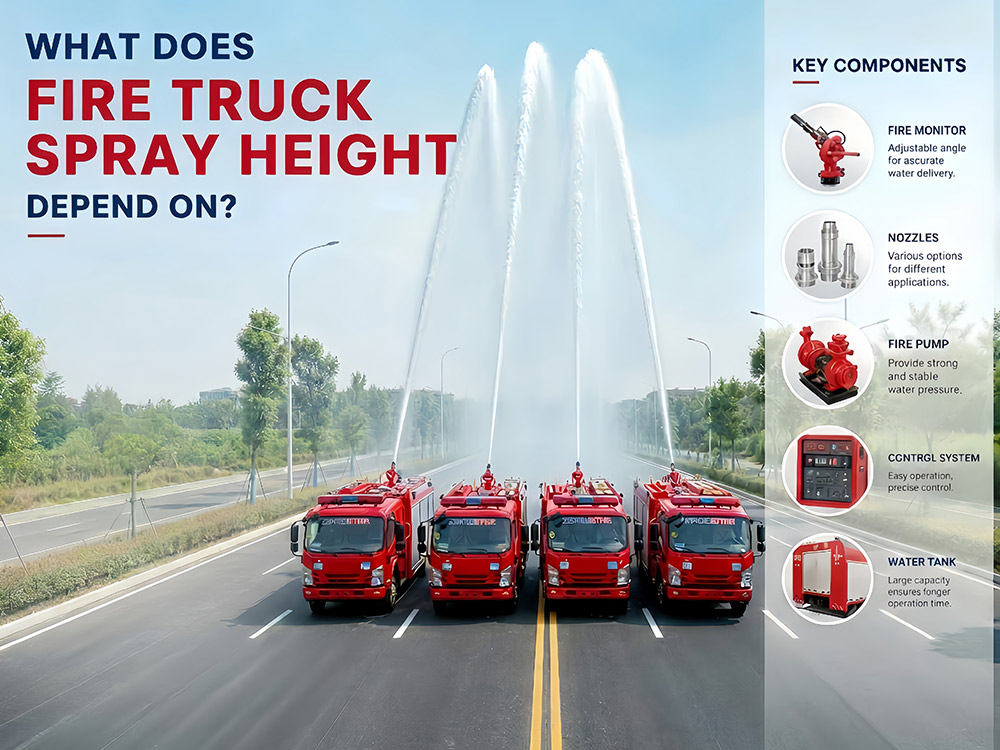
Le système de pompe et de pulvérisation du camion de pompiers est le cœur des opérations de lutte contre l'incendie. Il agit comme le « bras puissant » du camion de pompiers. En convertissant la puissance du moteur en pression (allant de 0,8 à 1,4 MPa), il délivre des agents extincteurs à des hauteurs pouvant atteindre 85 mètres — qu'il s'agisse d'un incendie dans un immeuble de grande hauteur au cœur d'une ville densément peuplée ou d'un incendie de réservoir de stockage pétrochimique dans une zone industrielle, le camion de pompiers s'appuie sur ce système pour obtenir une extinction efficace des incendies. Quels facteurs influencent la hauteur de projection d'un camion de pompiers, et comment la pression de la pompe, le débit et la lance-canon incendie fonctionnent-ils ensemble ? Ce sont les points qui préoccupent de nombreux clients. Découvrons-les aujourd'hui. » I. Trois composants clés qui déterminent la hauteur de projection 1. Système de pompe incendie : Le cœur du camion de pompiers. Pompe centrifuge entraînée par une prise de force (PTO). Classes de pression courantes : 0,8 MPa, 1,0 MPa, 1,2 MPa, 1,4 MPa. Débits de 2 000 à plus de 5 000 L/min. 2. Lance-canon incendie : Le dernier composant avant que l'agent extincteur ne quitte le camion. Disponible en lance-canon à eau, lance-canon à mousse et lance-canon mixte. La série PL (PL48) offre des débits allant jusqu'à 4 000 L/min et une hauteur de projection supérieure à 70 mètres. 3. Système de distribution : Canalisations, tuyaux et buses qui transportent l'agent extincteur de la pompe jusqu'à la lance-canon. Le diamètre du tuyau, sa longueur et le type de buse influencent tous la hauteur finale de projection. » II. Facteurs essentiels qui déterminent la hauteur de projection 1.1. Pression de la pompe La pression de la pompe d'un camion de pompiers est la force générée par la pompe incendie pour pousser l'agent extincteur à travers les tuyaux et l'évacuer par les buses ou les lances-canons. Elle est le principal facteur déterminant à la fois le débit et la distance de projection. Une pression plus élevée produit une vitesse plus importante à la sortie de la lance-canon, augmentant directement la hauteur de projection. La relation est régie par la formule H ≈ P/(ρg), où chaque augmentation de 0,1 MPa ajoute environ 10 mètres de hauteur théorique — mais les pertes réelles réduisent cette valeur. Dans les opérations pratiques de lutte contre l'incendie, les plages suivantes s'appliquent : Pression de la pompe Hauteur de projection typique 0,8 MPa 35–45 mètres 1,0 MPa 45–55 mètres 1,2 MPa 55–70 mètres 1,4 MPa 70–85 mètres 1.2. Fonctionnement de la pompe incendie : La pompe est généralement une pompe centrifuge entraînée par le moteur du camion via une prise de force (PTO). Lorsque la roue de la pompe tourne, elle aspire l'agent extincteur et le projette vers l'extérieur par force centrifuge, créant une pression qui le propulse dans le système d'évacuation. Pression nominale par rapport à la pr...
Détails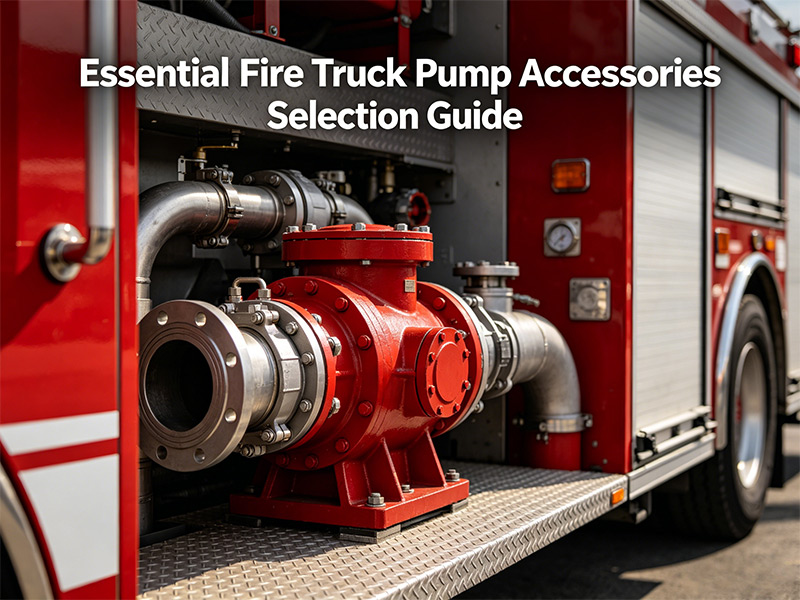
Un système de pompe de camion de pompiers n'est aussi fiable que ses composants. Du prélèvement de l'eau à partir d'une source jusqu'à son refoulement à haute pression, chaque accessoire joue un rôle essentiel. Ce guide couvre camion de pompiers cinq catégories clés d'accessoires : amorceurs, vannes à boisseau sphérique, vannes à soupape, proportionneurs de mousse et systèmes de commande hydrauliques. La compréhension de ces composants aide les pompiers à entretenir leur équipement et à choisir les accessoires adaptés aux applications spécifiques. I. Série d'amorceurs (dispositifs d'amorçage sous vide) Les amorceurs sont essentiels pour aspirer l'eau des lacs, des rivières ou d'autres sources statiques lorsqu'une borne d'incendie n'est pas disponible. Ils éliminent l'air de la pompe et du tuyau d'aspiration, permettant à la pression atmosphérique de pousser l'eau dans la pompe. Présentation du produit Produit Vide maximal Tension Puissance Taille de pompe adaptée amorceur à 2 pistons >85kPa 24V - Inférieure à 100 L/s amorceur électrique à 2 pistons >85kPa 24V 2.1KW Inférieure à 100 L/s amorceur à 4 pistons >85kPa 24V - Supérieure à 100 L/s amorceur électrique à 4 pistons >85kPa 24V 2.1KW Supérieure à 100 L/s Caractéristique clé : amorceurs électriques Les amorceurs électriques offrent un avantage considérable : ils peuvent amorcer la pompe sans que celle-ci ne tourne. Cela protège le joint mécanique contre les dommages causés par un fonctionnement à sec. Lorsqu'un amorceur standard nécessite que la pompe tourne, la version électrique fonctionne indépendamment, prolongeant ainsi la durée de vie du joint. II. Série de vannes à boisseau sphérique (commande du débit) Les vannes à boisseau sphérique contrôlent le débit d'eau dans les tuyaux et les sorties de refoulement. Elles sont conçues pour une ouverture et une fermeture rapides grâce à une simple rotation de 90°. Vannes à boisseau sphérique en acier inoxydable Modèle Matériau Pression nominale Filetage Commande FQS65/2.5 Corps et bille : acier inoxydable 304 ; Joint : PTFE 2,5 MPa G2-1/2" Volant / Levier FQS80/2.5 Corps et bille : acier inoxydable 304 ; Joint : PTFE 2,5 MPa G3" Volant / Levier Vannes à bille en alliage d'aluminium (poids plus léger) Modèle Matériau Pression nominale Filetage Commande FQS65/2.5 Corps : A356.2 ; Bille : 304 ; Joint : PTFE 2.5 MPa G2.5" Volant manuel / Levier FQS80/1.6 Corps : A356.2 ; Bille : 304 ; Joint : PTFE 1.6 MPa G3" Volant manuel / Levier FQS65/2.5 Carré Corps : A356.2 ; Bille : 304 ; Joint : PTFE 2.5 MPa - Pneumatique / Levier Ⅲ. Série de vannes à soupape (régulation de pression et de débit) Contrairement aux vannes à bille conçues pour un fonctionnement marche/arrêt, les vannes à soupape permettent un contrôle précis du débit et de la pression. Elles sont idéales pour les situations nécessitant un réglage progressif. Modèle Matériau Pression nominale Filetage Fonctionnement DN65/2,5 Corps : A356.2 ; Tige : H62 ; Joint : NBR ...
Détails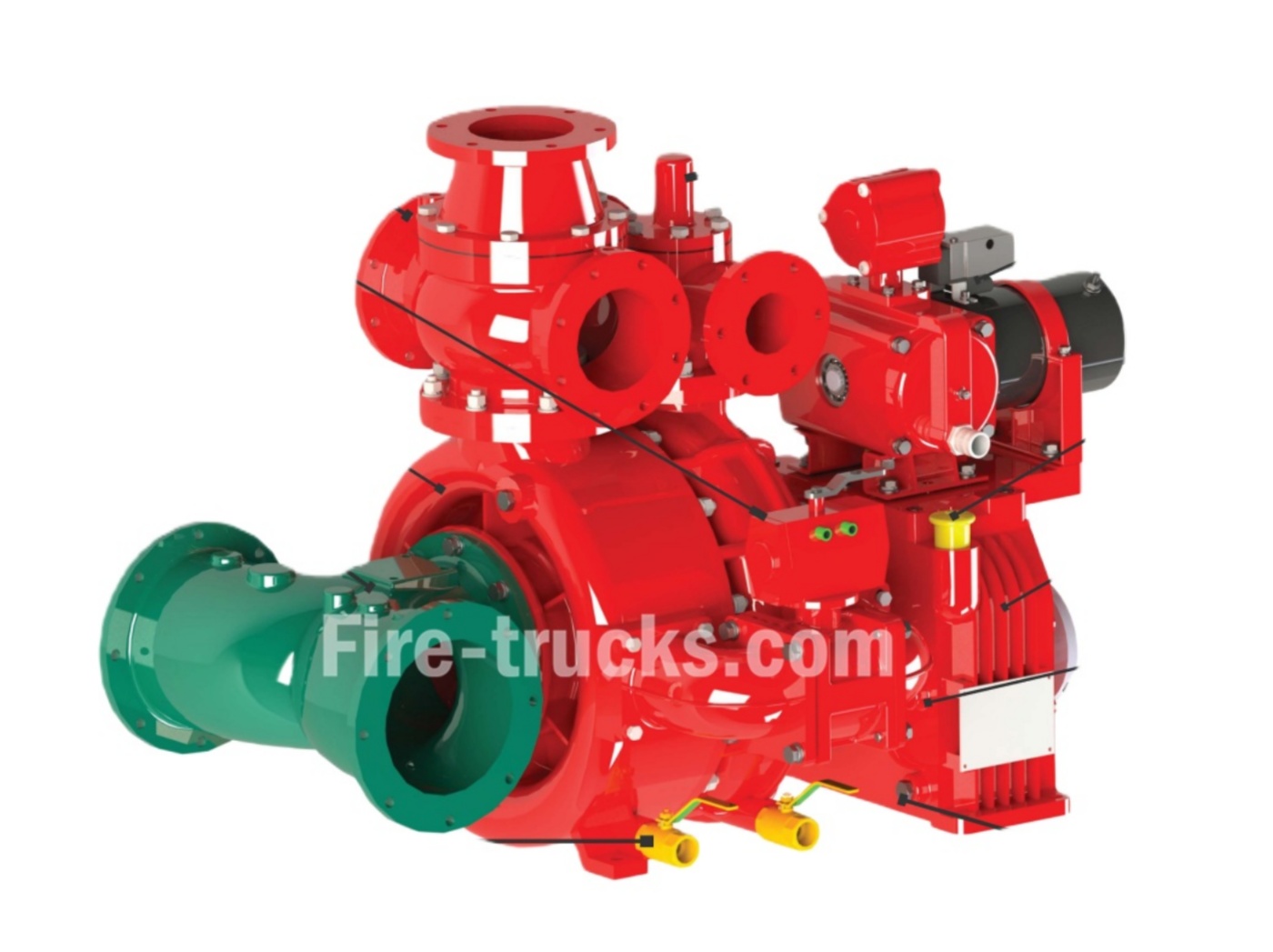
En tant que xiongzhen professionnel fabricant de pompes à incendie en Chine, Camions Powerstar La société Xiongzhen commercialise sa propre gamme de produits sous la marque « Xiongzhen », comprenant des pompes incendie basse pression, moyenne-basse pression et des pompes incendie mobiles haute-basse pression, ainsi que des équipements auxiliaires tels que des canons à eau et des doseurs de mousse. Ses pompes incendie utilisent des matériaux innovants comme l'alliage d'aluminium et l'acier inoxydable et sont équipées d'un embrayage électromagnétique à débrayage automatique et d'un clapet anti-retour, garantissant d'excellentes performances, une utilisation simple et une maintenance aisée. Les produits de la société ont passé avec succès les tests de type du Centre national de supervision et d'inspection de la qualité des équipements d'incendie, et sont certifiés CCC et ISO 9001. Les pompes à incendie Xiongzhen comprennent principalement les modèles suivants : CB10/20-XZ, CB10/30-XZ , CB10/40-XZ, CB10/60-XZ , CB10/80-XZ, CB10/100-XZ, CB20.10/15.30-XZ, CB20.10/20.40-XZ, CB20.10/30.60-XZ, etc. Pompe à incendie CB10/20-XZ pour camions de pompiers Pompes à incendie CB10/30-XZ pour camions de pompiers Pompes à incendie modèle CB10/40-XZ pour camion de pompiers Chine Pompes à incendie modèle CB10-60 pour camions de pompiers Pompes à incendie d'urgence CB10/80-XZ pour camions de pompiers Pompes de lutte contre l'incendie CB10/100-XZ pour véhicules de pompiers Spécifications du système de pompe à incendie Xiongzhen CB10/100-XZ Fabricants de pompes à incendie Xiongzhen série CB Spécifications des groupes motopompes incendie CB10/150 Système de pompe anti-incendie CB10/160-XZ, usine Xiongzhen Spécifications des pompes à incendie d'urgence CB10/170-XZ Powerstar Trucks bénéficie d'une solide expertise technique, attestée par quatre brevets, et utilise des équipements de production de pointe, tels que la conception assistée par ordinateur (CAO) et les machines-outils à commande numérique (CNC), afin de garantir un taux de conformité élevé des produits et la satisfaction de la clientèle. Ses produits sont principalement destinés aux ateliers de modification de camions de pompiers et aux services d'incendie. Spécifications détaillées de la pompe à incendie CB20.10 20.40 Pompe à incendie CB20.10 30.60-XZ de l'usine Xiongzhen Pompe à incendie série CB20/15-XZ Pompe à incendie d'urgence série CB20/20-XZ Détails d'installation de la pompe à incendie CB20 25 Voici un programme d'entretien pour votre XIONGZHEN pompes à incendie , classés par semaine, mois, trimestre et année pour une consultation facile : 01, Inspection quotidienne de la pompe à incendie Powersar : Vérifiez la pression de démarrage et d'arrêt ainsi que la fréquence de la pompe de stabilisation de pression. Vérifiez la puissance de la batterie de démarrage de la pompe à incendie à moteur diesel. Vérifiez l'aspect des vannes de régulation de la source d'eau et des ensembles de vannes d'alarme afin de déc...
Détails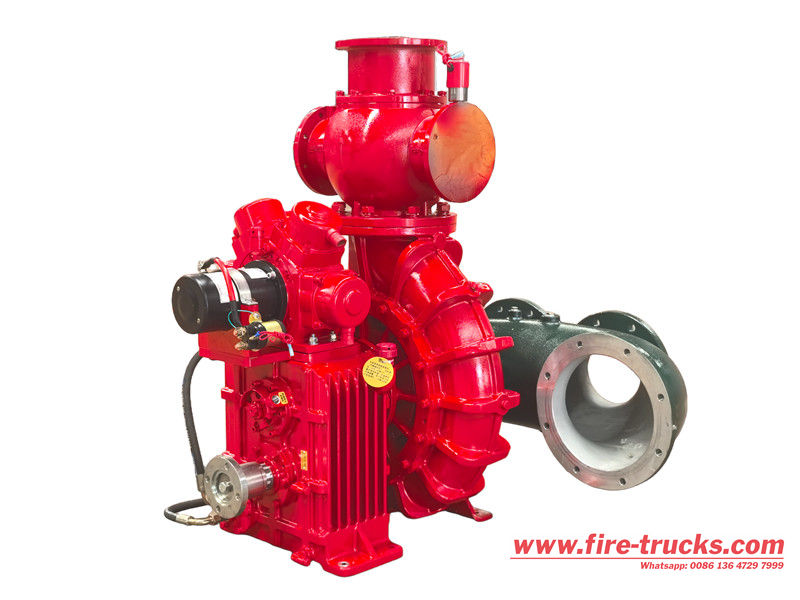
La pompe à mousse CB10/140 est un système d'alimentation en eau incendie couramment utilisé, monté sur véhicule ou stationnaire. D'une pression nominale de 1,0 MPa et d'un débit nominal de 140 l/s, elle répond aux besoins essentiels en eau des systèmes de lutte contre l'incendie. Le corps de pompe et la roue sont fabriqués à partir de matériaux de haute qualité et résistants à l'usure, offrant une excellente résistance à la corrosion et aux hautes pressions. Il est doté d'une conception à double entrée pour une commutation rapide de la source d'eau et est entraîné par un moteur à haut rendement ou un moteur diesel, permettant un temps de démarrage de 30 secondes ou moins. Grâce à sa conception compacte, sa facilité d'entretien et son fonctionnement fiable, Pompe à mousse pour incendie CB10/140 est un équipement essentiel pour assurer un approvisionnement en eau efficace lors des opérations de lutte contre les incendies. La pompe à incendie basse pression CB10/140-XZ, montée sur camion, est dotée d'une structure centrifuge mono-étagée avec un corps de pompe en alliage d'aluminium et une turbine en laiton. Elle utilise un système d'amorçage électrique à quatre pistons avec commande électrique. La pompe à mousse CB10/20 (en option) est équipée d'un mécanisme de séparation pneumatique. Ce produit offre d'excellentes performances, une conception compacte, une utilisation simple et un entretien facile. La pompe incendie CB10/140-XZ est une pompe à eau centrifuge mono-étagée utilisée dans les camions de pompiers. Elle se caractérise par son système d'amorçage à deux pistons à enclenchement et déclenchement automatiques. Conçue pour des performances élevées, elle présente une structure compacte, une utilisation simple et un entretien aisé. Ses principales caractéristiques techniques sont un débit de 140 l/s et une pression de refoulement de 1,0 MPa à une vitesse nominale de 2 600 tr/min. » . Principe de fonctionnement de la pompe à mousse anti-incendie CB10/140 ● Consommation d'eau et de concentré de mousse : L'eau est puisée dans une réserve, et le concentré de mousse est prélevé de son réservoir de stockage. ● Proportionnement : Le doseur mélange le concentré de mousse avec l'eau selon un rapport prédéterminé. ● Pressurisation : La pompe pressurise le mélange, augmentant ainsi sa vitesse et sa pression. ● Décharge: La solution de mousse sous pression est poussée par le tuyau de refoulement jusqu'à la buse, où elle est projetée sur le feu. ● Extinction des incendies : La mousse recouvre la source de combustible, la séparant de l'oxygène et éteignant le feu. » . Présentation détaillée de la pompe à mousse anti-incendie CB10/140 1. Conception structurelle supérieure, performances stables et fiables : ● Le Pompe à incendie CB10/140 Elle présente une conception centrifuge à un seul étage et est construite en alliage d'aluminium haute résistance, offrant des avantages tels que la légèreté, la résistance à la corrosion et la résistance aux hautes températures...
Détails
Veuillez lire la suite, restez informés, abonnez-vous, et n'hésitez pas à nous faire part de vos commentaires.

 Network IPv6 pris en charge

 français
 English
 Deutsch
 русский
 italiano
 español
 português
 Nederlands
 العربية
 日本語
日本語 한국의
한국의 Türkçe
 Melayu
 ไทย
ไทย Tiếng Việt
 Indonesia
  中文
中文 қазақ
қазақ Filipino
 မြန်မာ
 српски