Laisser un message
Si vous êtes intéressé par nos produits et souhaitez en savoir plus, veuillez laisser un message ici, nous vous répondrons dès que possible.

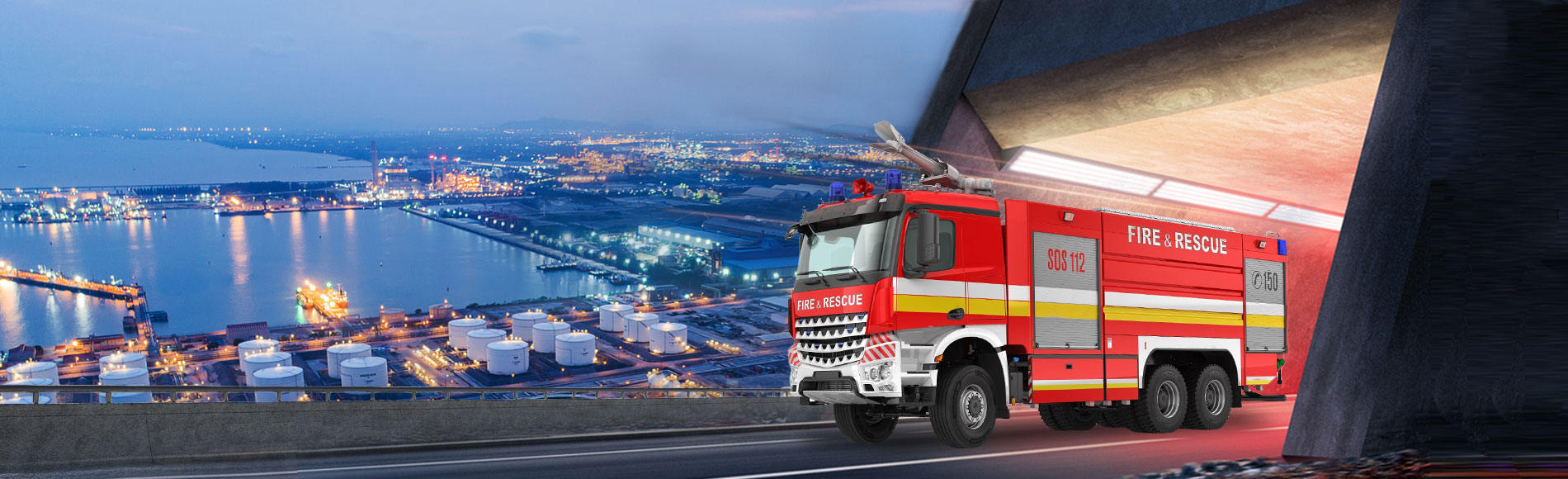
De quoi dépend la hauteur de projection d'un camion de pompiers ?
Le système de pompe et de pulvérisation du camion de pompiers est le cœur des opérations de lutte contre l'incendie. Il agit comme le « bras puissant » du camion de pompiers. En convertissant la puissance du moteur en pression (allant de 0,8 à 1,4 MPa), il délivre des agents extincteurs à des hauteurs pouvant atteindre 85 mètres — qu'il s'agisse d'un incendie dans un immeuble de grande hauteur au cœur d'une ville densément peuplée ou d'un incendie de réservoir de stockage pétrochimique dans une zone industrielle, le camion de pompiers s'appuie sur ce système pour obtenir une extinction efficace des incendies.
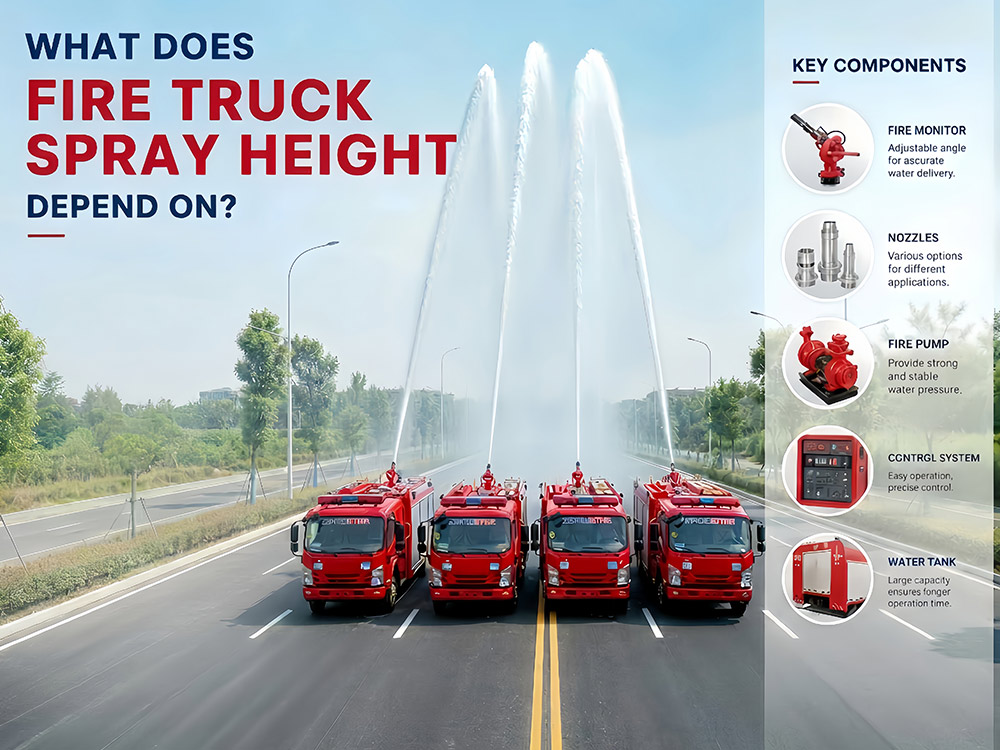
Quels facteurs influencent la hauteur de projection d'un camion de pompiers, et comment la pression de la pompe, le débit et la lance-canon incendie fonctionnent-ils ensemble ? Ce sont les points qui préoccupent de nombreux clients. Découvrons-les aujourd'hui.
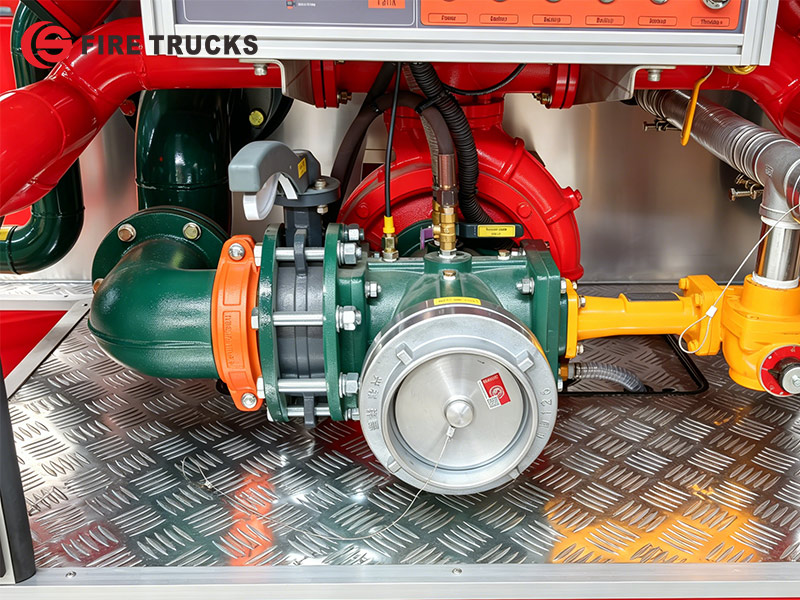
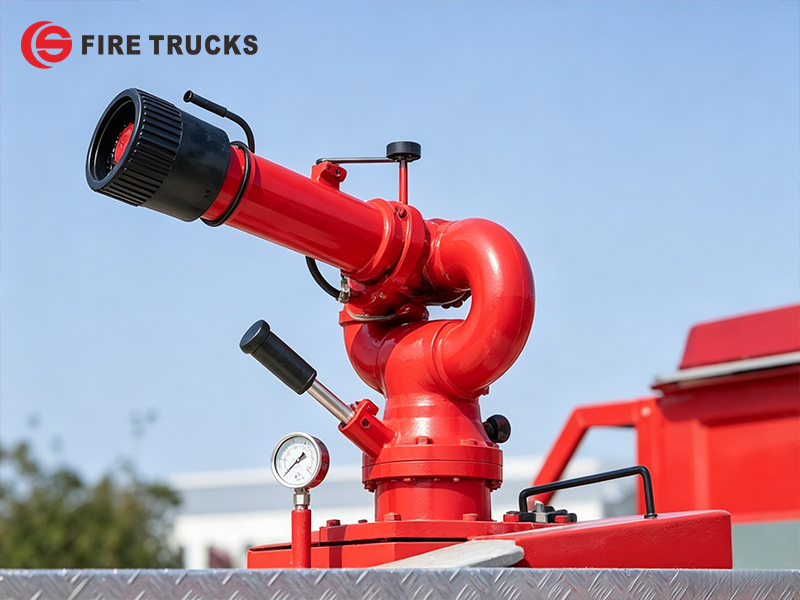
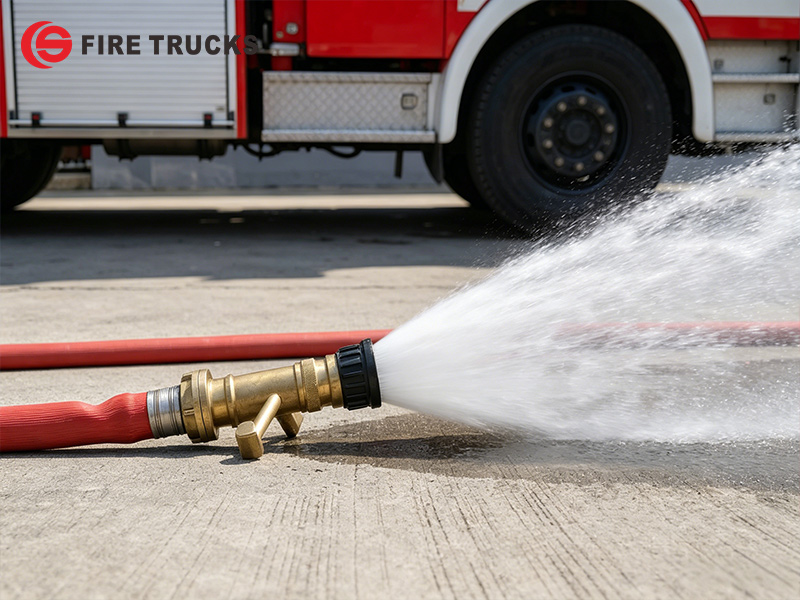
La pression de la pompe d'un camion de pompiers est la force générée par la pompe incendie pour pousser l'agent extincteur à travers les tuyaux et l'évacuer par les buses ou les lances-canons. Elle est le principal facteur déterminant à la fois le débit et la distance de projection. Une pression plus élevée produit une vitesse plus importante à la sortie de la lance-canon, augmentant directement la hauteur de projection. La relation est régie par la formule H ≈ P/(ρg), où chaque augmentation de 0,1 MPa ajoute environ 10 mètres de hauteur théorique — mais les pertes réelles réduisent cette valeur.
Dans les opérations pratiques de lutte contre l'incendie, les plages suivantes s'appliquent :
| Pression de la pompe | Hauteur de projection typique |
| 0,8 MPa | 35–45 mètres |
| 1,0 MPa | 45–55 mètres |
| 1,2 MPa | 55–70 mètres |
| 1,4 MPa | 70–85 mètres |
La pompe est généralement une pompe centrifuge entraînée par le moteur du camion via une prise de force (PTO). Lorsque la roue de la pompe tourne, elle aspire l'agent extincteur et le projette vers l'extérieur par force centrifuge, créant une pression qui le propulse dans le système d'évacuation.
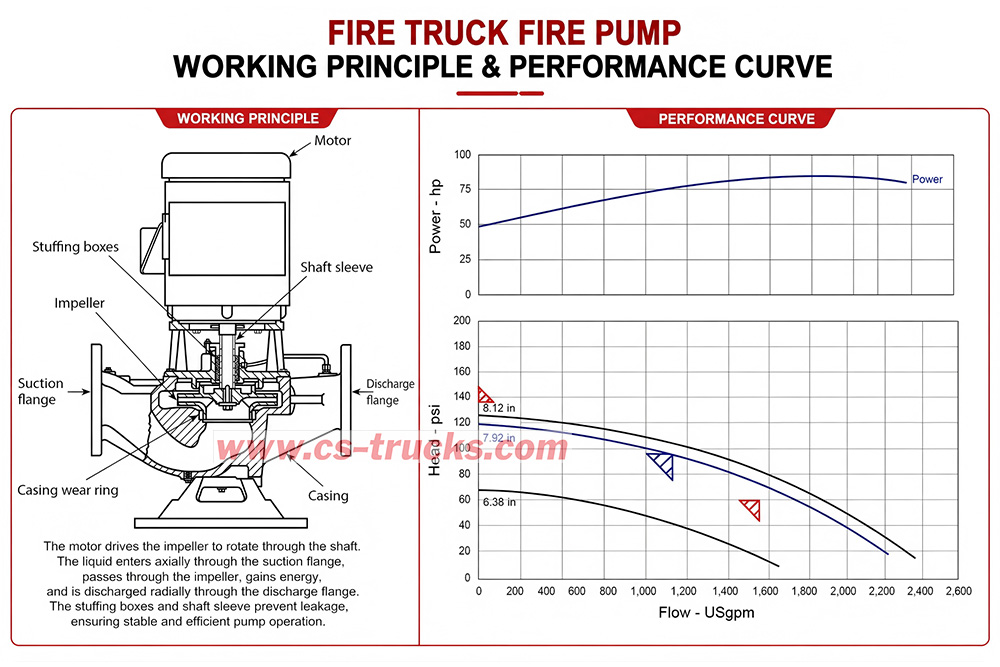 Pression nominale par rapport à la pression de fonctionnement :
| Terme | Définition |
| Pression nominale | La pression maximale que la pompe peut maintenir en continu dans les conditions de conception |
| Pression de fonctionnement | La pression réellement utilisée pendant la lutte contre l'incendie, généralement inférieure à la pression nominale afin de conserver une marge de sécurité |
Un débit suffisant est aussi important que la pression. Une pression élevée avec un faible débit ne peut pas fournir assez d'agent extincteur pour maîtriser un incendie. Le système de pompe doit maintenir simultanément la pression et le débit.
Débit et hauteur de projection :
2 000 L/min → efficace pour les incendies municipaux
3 000 L/min → adapté aux parcs industriels
4 000 L/min → requis pour les installations pétrochimiques
5 000+ L/min → nécessaire pour les opérations de sauvetage après un accident d'avion
Le chemin d'écoulement interne, le diamètre de sortie et le type du canon affectent directement la hauteur de pulvérisation.
Comparaison des types de canons :
Canon à eau : hauteur maximale, chemin d'écoulement droit
Canon à mousse : légèrement inférieur (5–10 % de moins) en raison de la turbulence liée à l'admission d'air
Canon polyvalent : modéré (compromis entre eau et mousse)
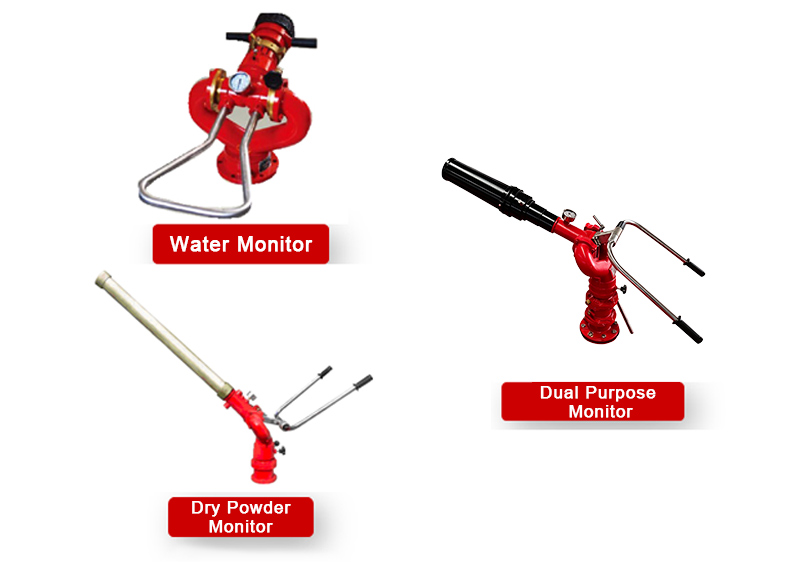
L'eau et la mousse ont des densités différentes. La solution moussante est environ 5 à 10 % plus dense que l'eau, ce qui réduit légèrement la hauteur de pulvérisation à la même pression. Cela doit être pris en compte lors de la sélection de l'équipement pour les opérations avec mousse.
Lorsque l'agent extincteur circule dans les tuyaux et les conduites, le frottement réduit la pression au niveau du canon. Des tuyaux plus longs et des diamètres plus petits augmentent les pertes.
Facteurs de perte par frottement :
Longueur du tuyau : plus long = plus de pertes
Diamètre du tuyau : plus petit = plus de pertes
Raccords et coudes : chacun ajoute une résistance
Pour fournir aux clients les meilleures solutions de lutte contre l'incendie, FIRE TRUCKS sélectionne le système le plus adapté en fonction des applications
exigences :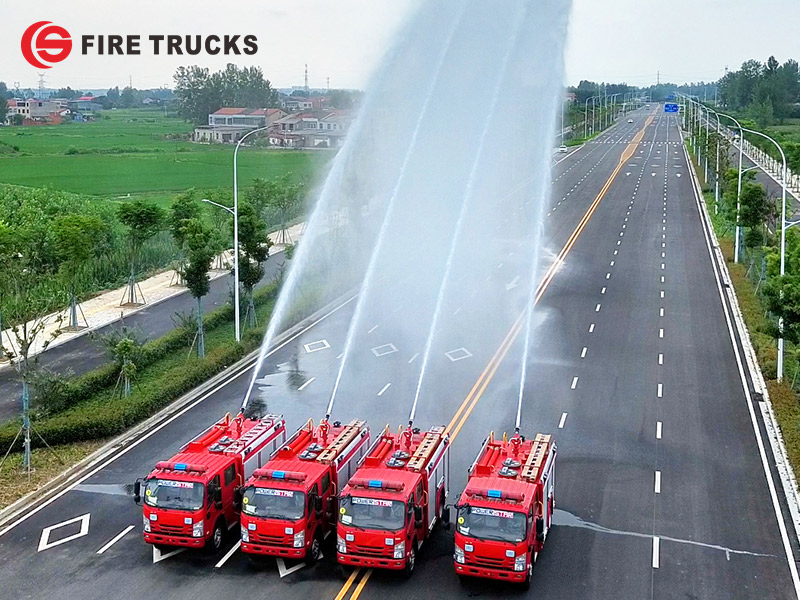
| Pression de la pompe | Débit | Hauteur de pulvérisation | Application recommandée |
| 0,8 MPa | 2 000 L/min | 35–45 m | Lutte contre les incendies municipaux |
| 1,0 MPa | 3 000 L/min | 45–55 m | Parcs industriels |
| 1,2 MPa | 4 000 L/min | 55–70 m | Installations pétrochimiques |
| 1,4 MPa | 5 000+ L/min | 70–85 m | Lutte contre les incendies d'aéroport |
| Application | Type de canon recommandé | Raison |
| Lutte contre les incendies municipaux | Canon à eau | Hauteur de projection maximale, fonctionnement simple |
| Raffinerie de pétrole/usine chimique | Canon à mousse ou à double usage | Gère les incendies de liquides inflammables |
| Secours en cas d'accident d'avion | Canon à mousse (haute capacité) | Un grand volume de mousse est requis |
| Risques d'incendie mixtes | Canon à double usage | Flexibilité pour l'eau et la mousse |
| Facteur | Impact | Comment optimiser |
| Pression de la pompe | Directement proportionnelle | Sélectionner la pression appropriée pour l'application |
| Débit | Maintient la suppression des incendies | Équilibrer la pression avec le débit |
| Conception du canon | Variation jusqu'à 10 % | Adapter le type de canon à l'application |
| Type d'agent | La mousse réduit légèrement la hauteur | Tenir compte de la différence de densité |
| Perte par frottement | Réduit la pression effective | Utiliser des tuyaux plus courts/plus grands |
| Gain d'altitude | Consomme de la pression | Ajouter de la pression pour la hauteur |
| Vitesse du vent | Réduit la hauteur effective | Positionner le camion face au vent |
Contexte du cas :
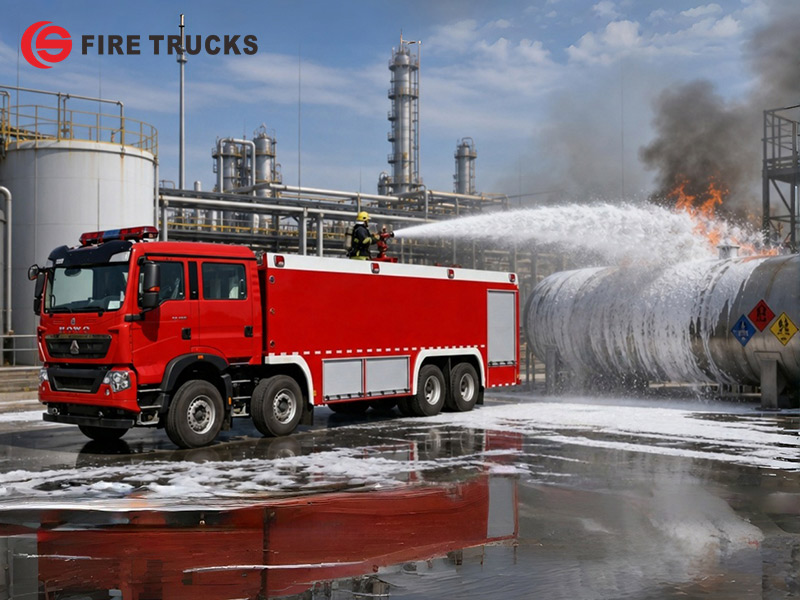
Un incendie de grande ampleur s'est déclaré dans une installation de stockage pétrochimique située dans une zone industrielle. L'incendie impliquait un réservoir à toit flottant de 50 mètres de diamètre contenant du pétrole brut. Les lances au sol ne pouvaient pas atteindre l'incendie en raison de la hauteur du réservoir et de la zone de chaleur rayonnante.
Configuration du camion d'incendie :
Camion incendie mousse 8×4
Système de pompe avec une pression nominale de 1,2 MPa / 4 000 L/min
Canon mousse/eau polyvalent PL48
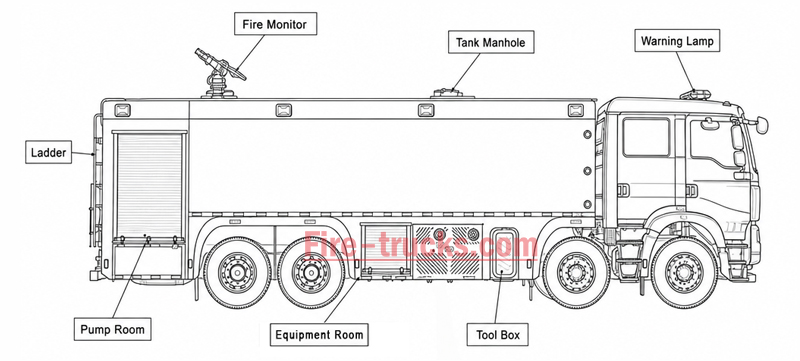
Performances réelles :
Hauteur de projection mesurée : environ 62 mètres
Couverture efficace : zone du réservoir d'environ 80 mètres de diamètre
La couverture de mousse a réussi à maîtriser l'incendie en 8 minutes
Leçon clé :
Pour les incendies de grands réservoirs de stockage, des pressions inférieures à 1,0 MPa sont souvent insuffisantes pour projeter la mousse sur la distance requise. La combinaison d'une pression adéquate, d'un débit élevé et d'un canon correctement sélectionné est essentielle pour une extinction efficace des incendies.
Idée reçue 1 : Une pression plus élevée est toujours meilleure
Réalité :Une pression plus élevée augmente la consommation d'énergie, le coût de l'équipement et la complexité de la maintenance. Une pression excessive peut également endommager les tuyaux et les buses. L'objectif est d'avoir une pression suffisante pour la tâche, et non une pression maximale.
Idée reçue 2 : La hauteur de projection est égale à la capacité de lutte contre l'incendie
Réalité :Le débit est souvent plus critique que la hauteur. Un jet élevé avec un faible débit peut ne pas fournir assez d'agent extincteur pour maîtriser un incendie. C'est la valeur combinée de la pression et du débit qui compte.
Idée reçue 3 : La perte par frottement peut être ignorée
Réalité :Sur de longues distances de tuyaux, la perte par frottement peut consommer 20 à 30 % de la pression de la pompe. Un calcul correct de la perte par frottement est essentiel pour garantir une pression suffisante à la buse.
Idée reçue 4 : Le canon ne fait aucune différence
Réalité :Une pompe haute pression reliée à un canon mal conçu n'atteindra pas la hauteur de projection maximale. Le chemin d'écoulement interne du canon, le diamètre de sortie et le type de canon influencent tous les performances finales. Adapter le canon à la pompe est aussi important que de sélectionner la pompe elle-même.
Q : Quelle est la pression de pompe la plus courante sur les camions d'incendie ?
R : La plupart des camions d'incendie sont conçus avec des pressions de pompe allant de 0,8 à 1,2 MPa, 1,0 MPa étant la norme la plus courante.
Q : Jusqu'à quelle hauteur une pompe de 1,0 MPa peut-elle projeter ?
R : Dans des conditions standard, une pompe de 1,0 MPa peut atteindre des hauteurs de projection de 45 à 55 mètres avec un canon moyen à grand.
Q : Pourquoi les incendies de grande hauteur nécessitent-ils une pression de pompe plus élevée ?
R : Les incendies de grande hauteur nécessitent une pression supplémentaire pour compenser le dénivelé (1,0 mètre de hauteur nécessite environ 0,01 MPa) et les pertes par frottement dans les conduites verticales de tuyaux.
Q : Un canon à mousse atteint-il la même hauteur de projection qu'un canon à eau ?
R : Typiquement, les lances-moniteurs à mousse atteignent des hauteurs légèrement inférieures (5 à 10 % de moins) que les lances-moniteurs à eau à la même pression, en raison de la conception de l'admission d'air qui crée des turbulences et de la densité plus élevée de la solution moussante.
Q : Quel est le facteur le plus important pour la hauteur du jet ?
R : Aucun facteur unique ne détermine la hauteur du jet. La pression de la pompe, le débit, la conception du moniteur, le type de buse et les conditions environnementales agissent tous ensemble. Un système bien équilibré est plus efficace qu'un système qui excelle dans un seul domaine.
Q : Le moniteur lui-même affecte-t-il la hauteur du jet ?
R : Oui. Le chemin d'écoulement interne du moniteur, le diamètre de sortie et le type (eau, mousse ou double usage) affectent tous directement la hauteur du jet. Un moniteur bien conçu maximise l'énergie fournie par la pompe.
La hauteur du jet dépend de plusieurs facteurs — la pression de la pompe, le débit, la conception du moniteur, le type d'agent, les pertes par friction, l'élévation et les conditions de vent
1,0–1,2 MPa est la plage de pression courante pour la plupart des applications industrielles de lutte contre l'incendie
Le choix du moniteur est important — une pompe haute pression avec un moniteur mal conçu n'atteindra pas la hauteur de jet maximale
Le débit est aussi important que la pression — une pression élevée avec un faible débit peut ne pas fournir suffisamment d'agent extincteur pour maîtriser un incendie
Les différents agents ont des caractéristiques de projection différentes — la mousse est plus dense et atteint une hauteur légèrement inférieure
Les projets pétrochimiques et aéroportuaires nécessitent généralement 1,2 MPa ou plus
Pour les projets internationaux, privilégiez les camions de pompiers conformes aux normes reconnues telles que NFPA, EN ou GB
La hauteur du jet d'un camion de pompiers n'est pas déterminée par un seul facteur. Elle dépend de l'effet combiné de la pression de la pompe, du débit, de la conception du moniteur, du type d'agent, des pertes par friction, du gain d'élévation et des conditions de vent.


Vous pouvez être intéressé par les informations suivantes
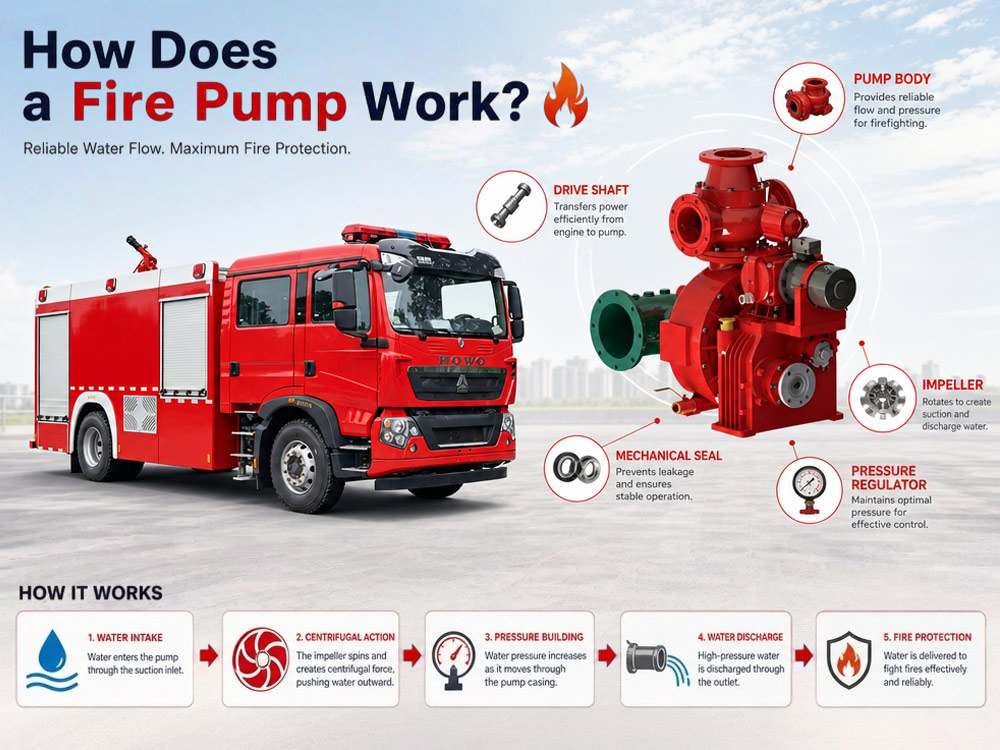
Une pompe à incendie est le cœur du système d'acheminement de l'eau de chaque camion de pompiers. Qu'il s'agisse d'intervenir lors d'un incendie de bâtiment, d'une urgence industrielle, d'un incident dans un aéroport ou d'une opération en zone naturelle, la pompe à incendiesur un camion de pompiers est chargée de fournir de l'eau à haute pression aux tuyaux, aux lances-canons et aux systèmes à mousse.Sa conception à turbine centrifuge et son système entraîné par prise de force garantissent une pression stable et des débits élevés, augmentant directement l'efficacité de la lutte contre les incendies de plus de 40 %, tout en réduisant le temps d'intervention par 3. Elle peut être considérée comme le gardien invisible des opérations de lutte contre les incendies et la pierre angulaire technique des interventions d'urgence modernes. Découvrez le fonctionnement d'une pompe à incendie, notamment son principe de fonctionnement, ses principaux composants, le processus d'écoulement de l'eau, la génération de pression et ses applications. Découvrez comment les pompes des camions de pompiers assurent une alimentation en eau fiable pour la lutte contre les incendies et comment choisir la pompe adaptée à votre véhicule d'incendie.Apprenons-en davantage aujourd'hui. » I. Tout d'abord, nous devons connaître les trois composants clés du système de pompe à incendie : 1. Turbine : Le composant rotatif qui aspire l'eau et la projette vers l'extérieur par force centrifuge. Généralement fabriqué en bronze, en acier inoxydable ou en fonte. 2. Corps de pompe : Le boîtier qui contient la turbine et dirige l'écoulement de l'eau. Conçu pour convertir la vitesse en pression. 3. Prise de force (PTO) : La connexion mécanique qui transfère la puissance du moteur de la transmission du camion vers la pompe à incendie. » II. Après avoir identifié les composants clés, le principe de fonctionnement fondamental de la pompe à incendie est le suivant : 1. La puissance est transférée du moteur par l'intermédiaire de la prise de force Le moteur du camion entraîne la prise de force, qui est reliée à l'arbre de la pompe. Lorsque l'opérateur active la prise de force, la puissance du moteur est redirigée pour faire tourner la turbine de la pompe à grande vitesse. 2. La turbine commence à tourner La turbine tourne à 1 500–2 500 tr/min, aspirant l'eau dans la pompe par l'entrée d'aspiration. Les pales de la turbine en rotation créent une zone de basse pression au centre, attirant l'eau depuis le réservoir embarqué, la bouche d'incendie ou une source d'eau naturelle. 3. La force centrifuge augmente la pression de l'eau Lorsque la turbine tourne, elle projette l'eau vers l'extérieur par force centrifuge. La vitesse de l'eau augmente lorsqu'elle se déplace du centre vers le bord extérieur de la turbine. Le corps de pompe convertit ensuite cette vitesse en pression, forçant l'eau à haute pression à sortir par l'orifice de refoulement. 4. L'eau à haute pression sort par l'orifice de refoulement L...
Détails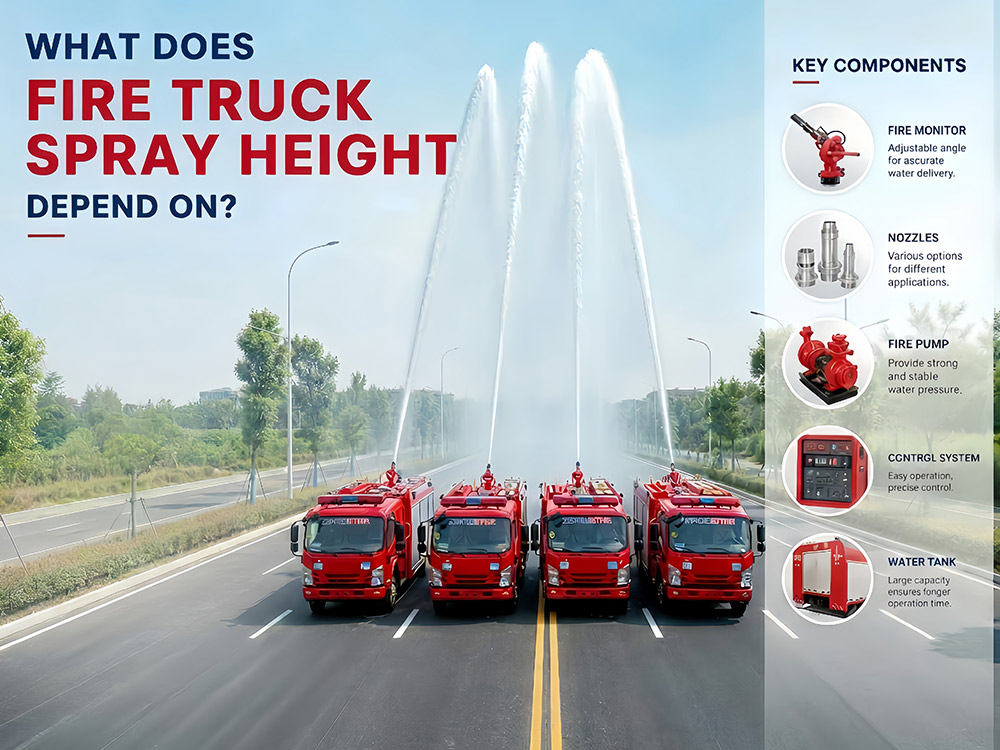
Le système de pompe et de pulvérisation du camion de pompiers est le cœur des opérations de lutte contre l'incendie. Il agit comme le « bras puissant » du camion de pompiers. En convertissant la puissance du moteur en pression (allant de 0,8 à 1,4 MPa), il délivre des agents extincteurs à des hauteurs pouvant atteindre 85 mètres — qu'il s'agisse d'un incendie dans un immeuble de grande hauteur au cœur d'une ville densément peuplée ou d'un incendie de réservoir de stockage pétrochimique dans une zone industrielle, le camion de pompiers s'appuie sur ce système pour obtenir une extinction efficace des incendies. Quels facteurs influencent la hauteur de projection d'un camion de pompiers, et comment la pression de la pompe, le débit et la lance-canon incendie fonctionnent-ils ensemble ? Ce sont les points qui préoccupent de nombreux clients. Découvrons-les aujourd'hui. » I. Trois composants clés qui déterminent la hauteur de projection 1. Système de pompe incendie : Le cœur du camion de pompiers. Pompe centrifuge entraînée par une prise de force (PTO). Classes de pression courantes : 0,8 MPa, 1,0 MPa, 1,2 MPa, 1,4 MPa. Débits de 2 000 à plus de 5 000 L/min. 2. Lance-canon incendie : Le dernier composant avant que l'agent extincteur ne quitte le camion. Disponible en lance-canon à eau, lance-canon à mousse et lance-canon mixte. La série PL (PL48) offre des débits allant jusqu'à 4 000 L/min et une hauteur de projection supérieure à 70 mètres. 3. Système de distribution : Canalisations, tuyaux et buses qui transportent l'agent extincteur de la pompe jusqu'à la lance-canon. Le diamètre du tuyau, sa longueur et le type de buse influencent tous la hauteur finale de projection. » II. Facteurs essentiels qui déterminent la hauteur de projection 1.1. Pression de la pompe La pression de la pompe d'un camion de pompiers est la force générée par la pompe incendie pour pousser l'agent extincteur à travers les tuyaux et l'évacuer par les buses ou les lances-canons. Elle est le principal facteur déterminant à la fois le débit et la distance de projection. Une pression plus élevée produit une vitesse plus importante à la sortie de la lance-canon, augmentant directement la hauteur de projection. La relation est régie par la formule H ≈ P/(ρg), où chaque augmentation de 0,1 MPa ajoute environ 10 mètres de hauteur théorique — mais les pertes réelles réduisent cette valeur. Dans les opérations pratiques de lutte contre l'incendie, les plages suivantes s'appliquent : Pression de la pompe Hauteur de projection typique 0,8 MPa 35–45 mètres 1,0 MPa 45–55 mètres 1,2 MPa 55–70 mètres 1,4 MPa 70–85 mètres 1.2. Fonctionnement de la pompe incendie : La pompe est généralement une pompe centrifuge entraînée par le moteur du camion via une prise de force (PTO). Lorsque la roue de la pompe tourne, elle aspire l'agent extincteur et le projette vers l'extérieur par force centrifuge, créant une pression qui le propulse dans le système d'évacuation. Pression nominale par rapport à la pr...
Détails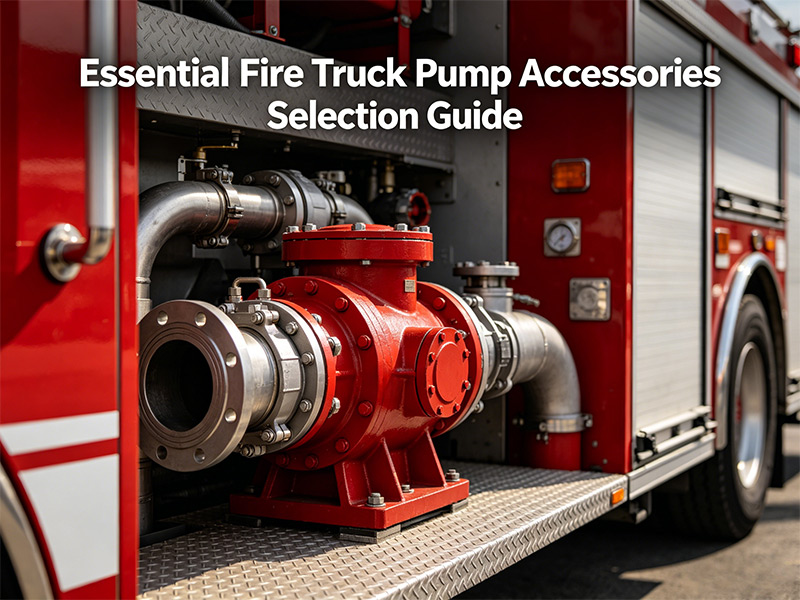
Un système de pompe de camion de pompiers n'est aussi fiable que ses composants. Du prélèvement de l'eau à partir d'une source jusqu'à son refoulement à haute pression, chaque accessoire joue un rôle essentiel. Ce guide couvre camion de pompiers cinq catégories clés d'accessoires : amorceurs, vannes à boisseau sphérique, vannes à soupape, proportionneurs de mousse et systèmes de commande hydrauliques. La compréhension de ces composants aide les pompiers à entretenir leur équipement et à choisir les accessoires adaptés aux applications spécifiques. I. Série d'amorceurs (dispositifs d'amorçage sous vide) Les amorceurs sont essentiels pour aspirer l'eau des lacs, des rivières ou d'autres sources statiques lorsqu'une borne d'incendie n'est pas disponible. Ils éliminent l'air de la pompe et du tuyau d'aspiration, permettant à la pression atmosphérique de pousser l'eau dans la pompe. Présentation du produit Produit Vide maximal Tension Puissance Taille de pompe adaptée amorceur à 2 pistons >85kPa 24V - Inférieure à 100 L/s amorceur électrique à 2 pistons >85kPa 24V 2.1KW Inférieure à 100 L/s amorceur à 4 pistons >85kPa 24V - Supérieure à 100 L/s amorceur électrique à 4 pistons >85kPa 24V 2.1KW Supérieure à 100 L/s Caractéristique clé : amorceurs électriques Les amorceurs électriques offrent un avantage considérable : ils peuvent amorcer la pompe sans que celle-ci ne tourne. Cela protège le joint mécanique contre les dommages causés par un fonctionnement à sec. Lorsqu'un amorceur standard nécessite que la pompe tourne, la version électrique fonctionne indépendamment, prolongeant ainsi la durée de vie du joint. II. Série de vannes à boisseau sphérique (commande du débit) Les vannes à boisseau sphérique contrôlent le débit d'eau dans les tuyaux et les sorties de refoulement. Elles sont conçues pour une ouverture et une fermeture rapides grâce à une simple rotation de 90°. Vannes à boisseau sphérique en acier inoxydable Modèle Matériau Pression nominale Filetage Commande FQS65/2.5 Corps et bille : acier inoxydable 304 ; Joint : PTFE 2,5 MPa G2-1/2" Volant / Levier FQS80/2.5 Corps et bille : acier inoxydable 304 ; Joint : PTFE 2,5 MPa G3" Volant / Levier Vannes à bille en alliage d'aluminium (poids plus léger) Modèle Matériau Pression nominale Filetage Commande FQS65/2.5 Corps : A356.2 ; Bille : 304 ; Joint : PTFE 2.5 MPa G2.5" Volant manuel / Levier FQS80/1.6 Corps : A356.2 ; Bille : 304 ; Joint : PTFE 1.6 MPa G3" Volant manuel / Levier FQS65/2.5 Carré Corps : A356.2 ; Bille : 304 ; Joint : PTFE 2.5 MPa - Pneumatique / Levier Ⅲ. Série de vannes à soupape (régulation de pression et de débit) Contrairement aux vannes à bille conçues pour un fonctionnement marche/arrêt, les vannes à soupape permettent un contrôle précis du débit et de la pression. Elles sont idéales pour les situations nécessitant un réglage progressif. Modèle Matériau Pression nominale Filetage Fonctionnement DN65/2,5 Corps : A356.2 ; Tige : H62 ; Joint : NBR ...
Détails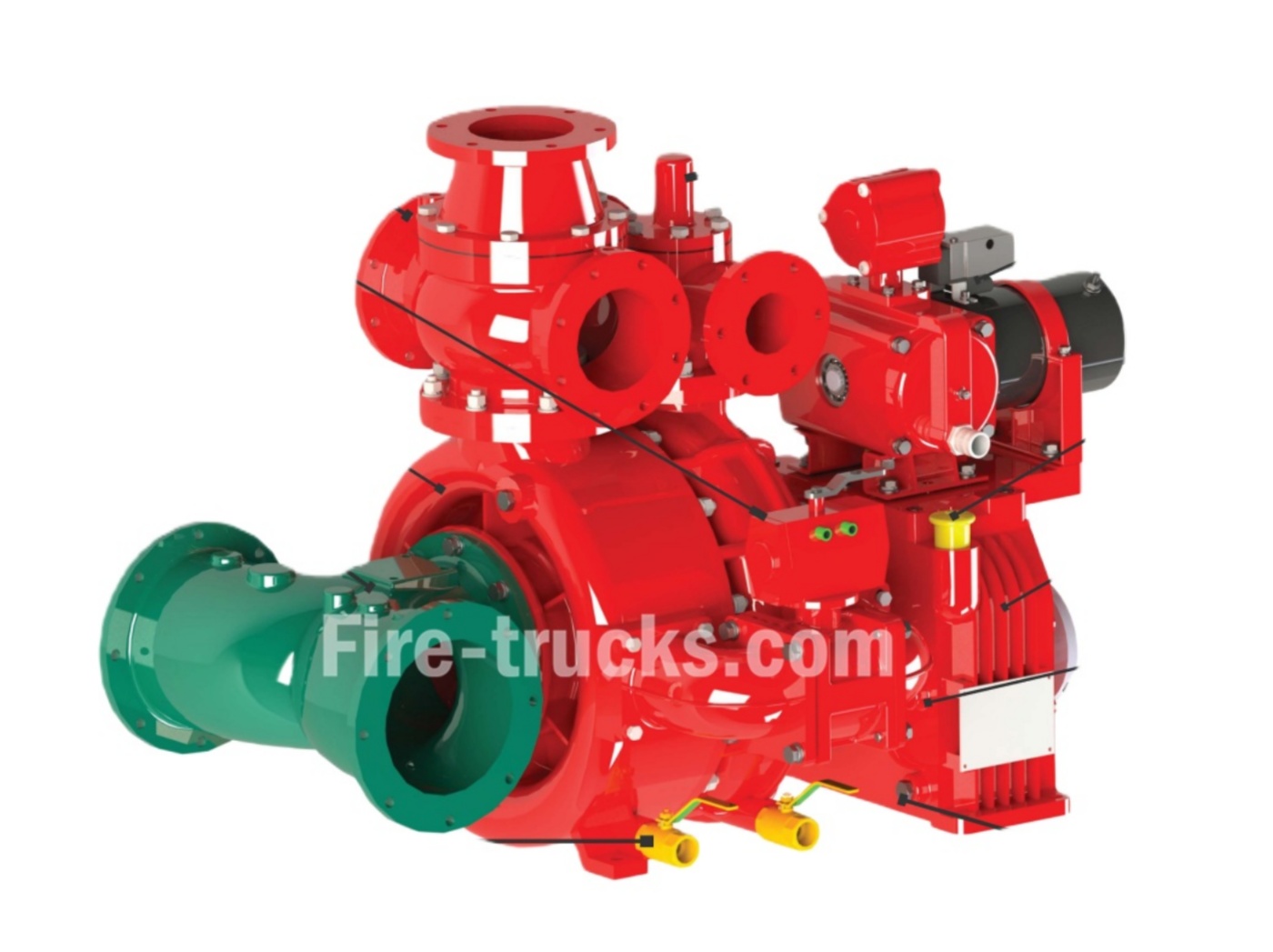
En tant que xiongzhen professionnel fabricant de pompes à incendie en Chine, Camions Powerstar La société Xiongzhen commercialise sa propre gamme de produits sous la marque « Xiongzhen », comprenant des pompes incendie basse pression, moyenne-basse pression et des pompes incendie mobiles haute-basse pression, ainsi que des équipements auxiliaires tels que des canons à eau et des doseurs de mousse. Ses pompes incendie utilisent des matériaux innovants comme l'alliage d'aluminium et l'acier inoxydable et sont équipées d'un embrayage électromagnétique à débrayage automatique et d'un clapet anti-retour, garantissant d'excellentes performances, une utilisation simple et une maintenance aisée. Les produits de la société ont passé avec succès les tests de type du Centre national de supervision et d'inspection de la qualité des équipements d'incendie, et sont certifiés CCC et ISO 9001. Les pompes à incendie Xiongzhen comprennent principalement les modèles suivants : CB10/20-XZ, CB10/30-XZ , CB10/40-XZ, CB10/60-XZ , CB10/80-XZ, CB10/100-XZ, CB20.10/15.30-XZ, CB20.10/20.40-XZ, CB20.10/30.60-XZ, etc. Pompe à incendie CB10/20-XZ pour camions de pompiers Pompes à incendie CB10/30-XZ pour camions de pompiers Pompes à incendie modèle CB10/40-XZ pour camion de pompiers Chine Pompes à incendie modèle CB10-60 pour camions de pompiers Pompes à incendie d'urgence CB10/80-XZ pour camions de pompiers Pompes de lutte contre l'incendie CB10/100-XZ pour véhicules de pompiers Spécifications du système de pompe à incendie Xiongzhen CB10/100-XZ Fabricants de pompes à incendie Xiongzhen série CB Spécifications des groupes motopompes incendie CB10/150 Système de pompe anti-incendie CB10/160-XZ, usine Xiongzhen Spécifications des pompes à incendie d'urgence CB10/170-XZ Powerstar Trucks bénéficie d'une solide expertise technique, attestée par quatre brevets, et utilise des équipements de production de pointe, tels que la conception assistée par ordinateur (CAO) et les machines-outils à commande numérique (CNC), afin de garantir un taux de conformité élevé des produits et la satisfaction de la clientèle. Ses produits sont principalement destinés aux ateliers de modification de camions de pompiers et aux services d'incendie. Spécifications détaillées de la pompe à incendie CB20.10 20.40 Pompe à incendie CB20.10 30.60-XZ de l'usine Xiongzhen Pompe à incendie série CB20/15-XZ Pompe à incendie d'urgence série CB20/20-XZ Détails d'installation de la pompe à incendie CB20 25 Voici un programme d'entretien pour votre XIONGZHEN pompes à incendie , classés par semaine, mois, trimestre et année pour une consultation facile : 01, Inspection quotidienne de la pompe à incendie Powersar : Vérifiez la pression de démarrage et d'arrêt ainsi que la fréquence de la pompe de stabilisation de pression. Vérifiez la puissance de la batterie de démarrage de la pompe à incendie à moteur diesel. Vérifiez l'aspect des vannes de régulation de la source d'eau et des ensembles de vannes d'alarme afin de déc...
Détails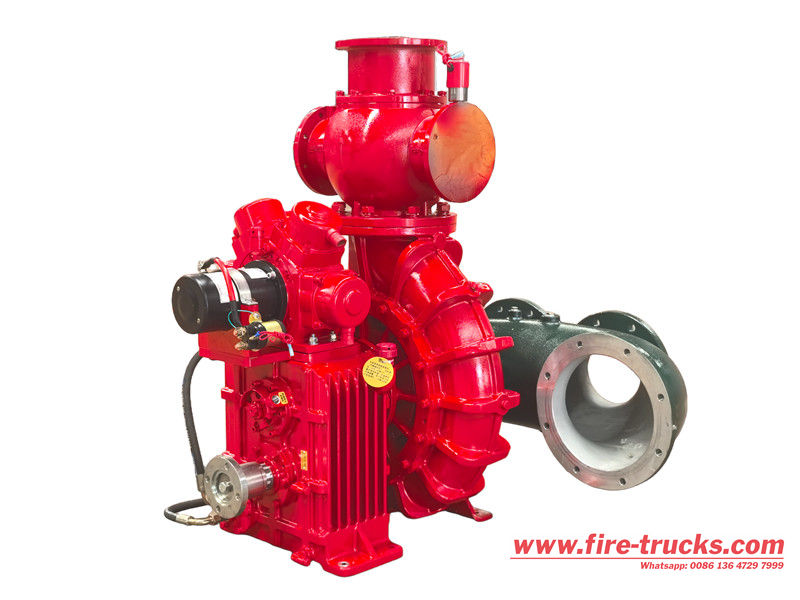
La pompe à mousse CB10/140 est un système d'alimentation en eau incendie couramment utilisé, monté sur véhicule ou stationnaire. D'une pression nominale de 1,0 MPa et d'un débit nominal de 140 l/s, elle répond aux besoins essentiels en eau des systèmes de lutte contre l'incendie. Le corps de pompe et la roue sont fabriqués à partir de matériaux de haute qualité et résistants à l'usure, offrant une excellente résistance à la corrosion et aux hautes pressions. Il est doté d'une conception à double entrée pour une commutation rapide de la source d'eau et est entraîné par un moteur à haut rendement ou un moteur diesel, permettant un temps de démarrage de 30 secondes ou moins. Grâce à sa conception compacte, sa facilité d'entretien et son fonctionnement fiable, Pompe à mousse pour incendie CB10/140 est un équipement essentiel pour assurer un approvisionnement en eau efficace lors des opérations de lutte contre les incendies. La pompe à incendie basse pression CB10/140-XZ, montée sur camion, est dotée d'une structure centrifuge mono-étagée avec un corps de pompe en alliage d'aluminium et une turbine en laiton. Elle utilise un système d'amorçage électrique à quatre pistons avec commande électrique. La pompe à mousse CB10/20 (en option) est équipée d'un mécanisme de séparation pneumatique. Ce produit offre d'excellentes performances, une conception compacte, une utilisation simple et un entretien facile. La pompe incendie CB10/140-XZ est une pompe à eau centrifuge mono-étagée utilisée dans les camions de pompiers. Elle se caractérise par son système d'amorçage à deux pistons à enclenchement et déclenchement automatiques. Conçue pour des performances élevées, elle présente une structure compacte, une utilisation simple et un entretien aisé. Ses principales caractéristiques techniques sont un débit de 140 l/s et une pression de refoulement de 1,0 MPa à une vitesse nominale de 2 600 tr/min. » . Principe de fonctionnement de la pompe à mousse anti-incendie CB10/140 ● Consommation d'eau et de concentré de mousse : L'eau est puisée dans une réserve, et le concentré de mousse est prélevé de son réservoir de stockage. ● Proportionnement : Le doseur mélange le concentré de mousse avec l'eau selon un rapport prédéterminé. ● Pressurisation : La pompe pressurise le mélange, augmentant ainsi sa vitesse et sa pression. ● Décharge: La solution de mousse sous pression est poussée par le tuyau de refoulement jusqu'à la buse, où elle est projetée sur le feu. ● Extinction des incendies : La mousse recouvre la source de combustible, la séparant de l'oxygène et éteignant le feu. » . Présentation détaillée de la pompe à mousse anti-incendie CB10/140 1. Conception structurelle supérieure, performances stables et fiables : ● Le Pompe à incendie CB10/140 Elle présente une conception centrifuge à un seul étage et est construite en alliage d'aluminium haute résistance, offrant des avantages tels que la légèreté, la résistance à la corrosion et la résistance aux hautes températures...
Détails
Veuillez lire la suite, restez informés, abonnez-vous, et n'hésitez pas à nous faire part de vos commentaires.

 Network IPv6 pris en charge

 français
 English
 Deutsch
 русский
 italiano
 español
 português
 Nederlands
 العربية
 日本語
日本語 한국의
한국의 Türkçe
 Melayu
 ไทย
ไทย Tiếng Việt
 Indonesia
  中文
中文 қазақ
қазақ Filipino
 မြန်မာ
 српски