Laisser un message
Si vous êtes intéressé par nos produits et souhaitez en savoir plus, veuillez laisser un message ici, nous vous répondrons dès que possible.

How Long Do Fire Trucks Last? Maintenance and Replacement Guide
A fire truck is a specialized emergency vehicle that needs to operate in harsh working environments. It not only needs to respond quickly to emergency tasks, but also needs to carry a large amount of equipment, transport water or fire extinguishing agents, and maintain reliable working performance in complex environments. However, like other commercial vehicles, fire trucks have a certain lifespan. Its actual service life depends on the quality of the chassis, operating environment, annual mileage, maintenance practices, and the overall condition of critical fire protection systems.
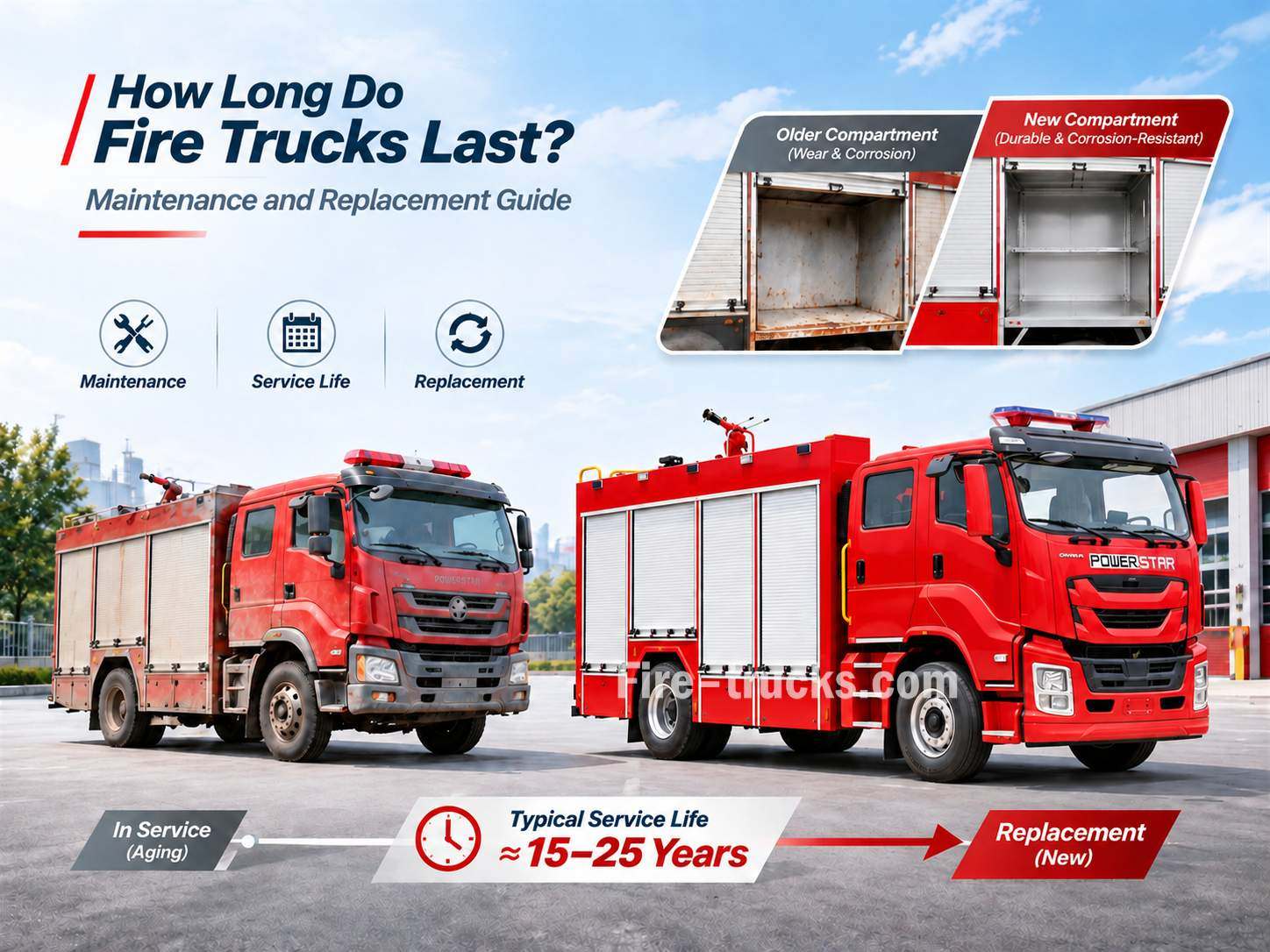
So, how long can a fire truck be used? There is no uniform replacement period that applies to all fire engines. A well-maintained vehicle may continue to serve for many years, while a vehicle that frequently performs emergency missions, is exposed to harsh environments for a long time, or lacks maintenance may need to be replaced sooner. This article will look at the main factors that affect the service life of a fire truck, how to extend the life of your vehicle through proper maintenance, and what signs you should consider replacing an older fire truck.
Quick Answer: How many years does a fire truck last?
The service life of a fire truck can usually be quoted as 10–20 years or more, but it depends on the model, work intensity, usage environment, maintenance records and the overall condition of the vehicle. In practice, a well-maintained fire truck with an intact chassis can operate for more than 25 years, while a fire truck with severe corrosion or outdated parts may need to be replaced sooner.
» I. How Long Does a Fire Truck Usually Last?
The life of a fire truck is usually divided into two stages:
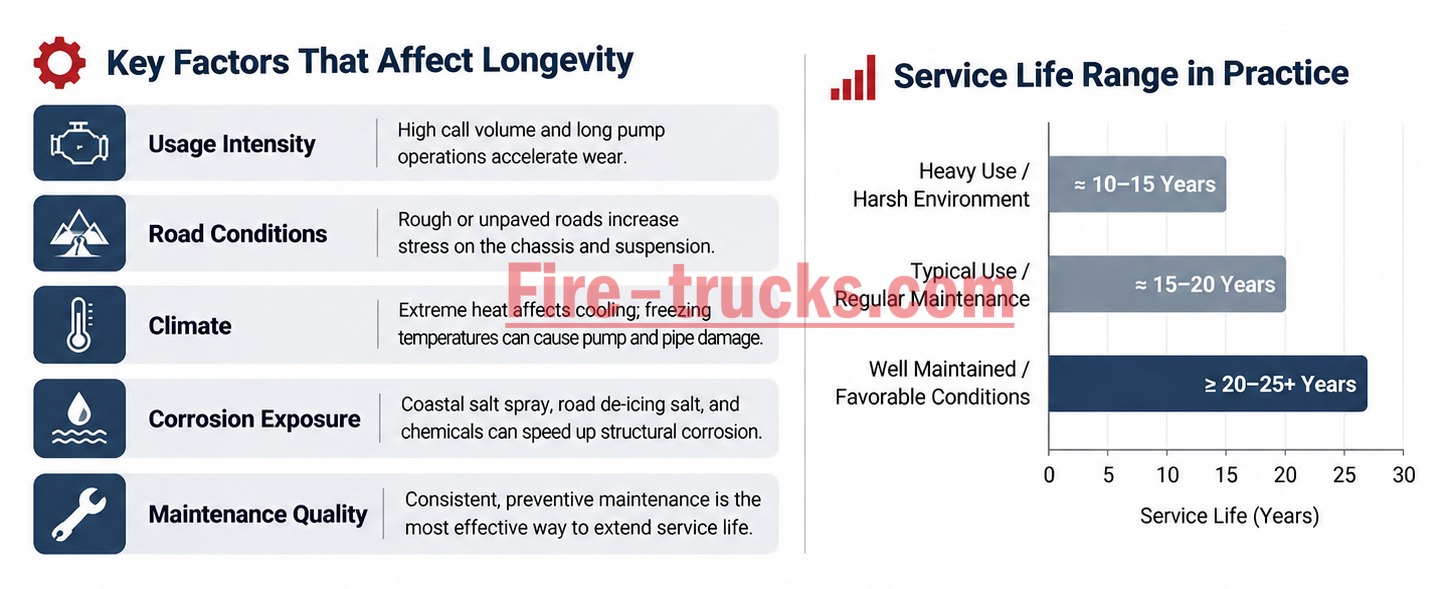
Front-line service (10-15 years): As the primary response unit, vehicles face high police traffic, heavy pumping operations, and daily wear and tear.
Reserve duty (15-25 years): The vehicle is transferred to reserve duty or low-intensity police service to extend its service life.
» II. Which Components Affect Fire Truck Service Life?
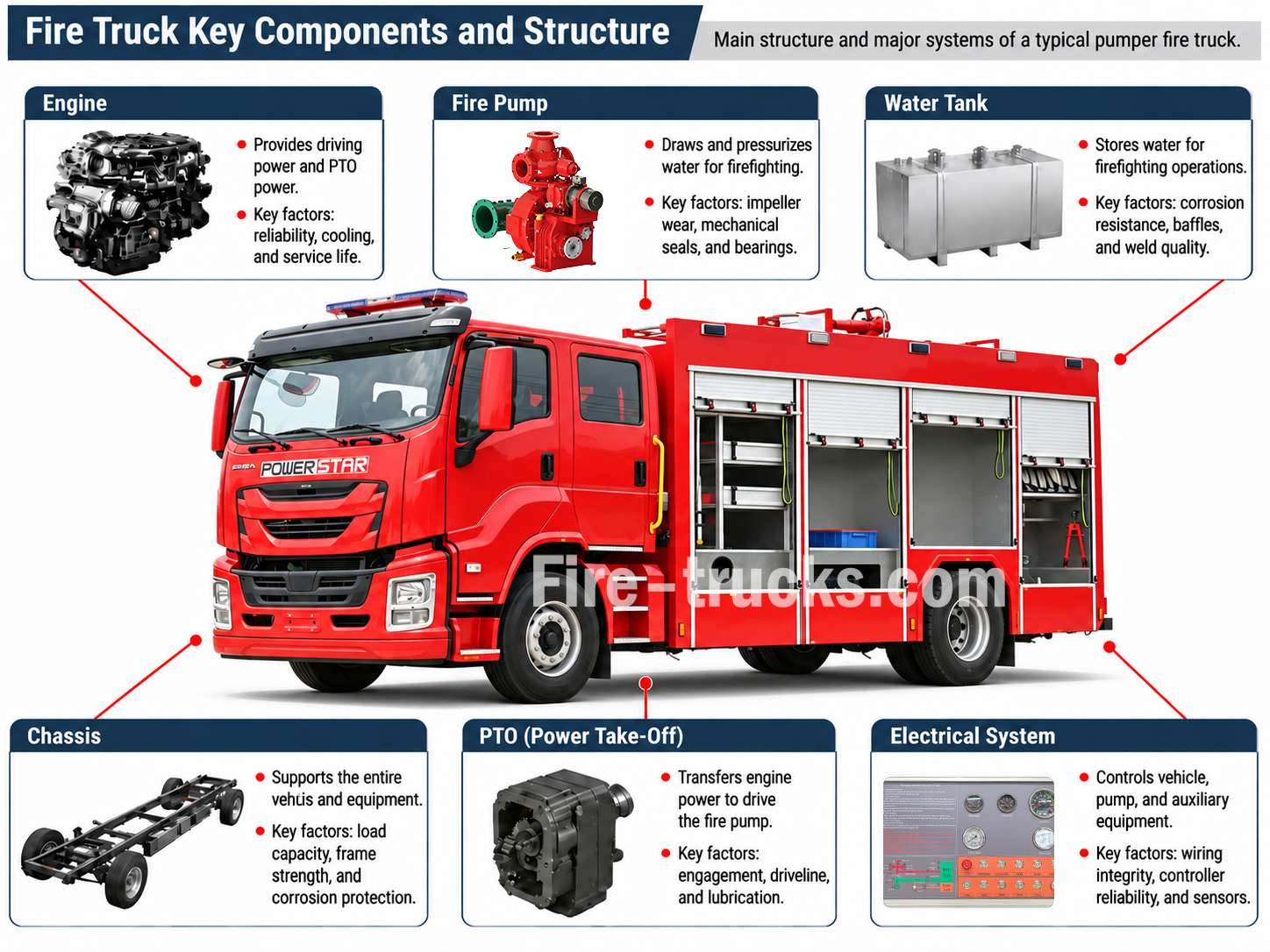
Fire trucks age because their core components wear out. The service life depends on the weakest link in the mechanical chain.
| Component | What Determines Its Lifespan |
|---|---|
| Chassis | Load-bearing capacity, frame strength, corrosion |
| Engine | Wear, cooling efficiency, operating hours |
| Fire Pump | Impeller wear, mechanical seal integrity, bearing condition |
| Water Tank | Corrosion resistance, baffle integrity, weld quality |
| Electrical System | Wiring integrity, controller reliability, sensor accuracy |
Impact of working conditions:
Two fire trucks built in the same year can have very different lifespans depending on how and where they are used. Five key factors determine this:
♦ Operating hours: High operating levels and long pump operations will accelerate engine and water pump wear.
♦ Road Conditions: Rough terrain and unpaved roads can cause stress on the chassis, suspension and body mounts.
♦ Climate: Extreme heat affects cooling systems; freezing temperatures can cause freeze damage to water pumps and pipes.
♦ Corrosion: Coastal salt spray, winter road salt and chemical exposure can accelerate structural rust.
♦ Maintenance quality: Continuous preventive maintenance is the most effective way to extend life.
» III. How to Maintain the Key Components of a Fire Truck?
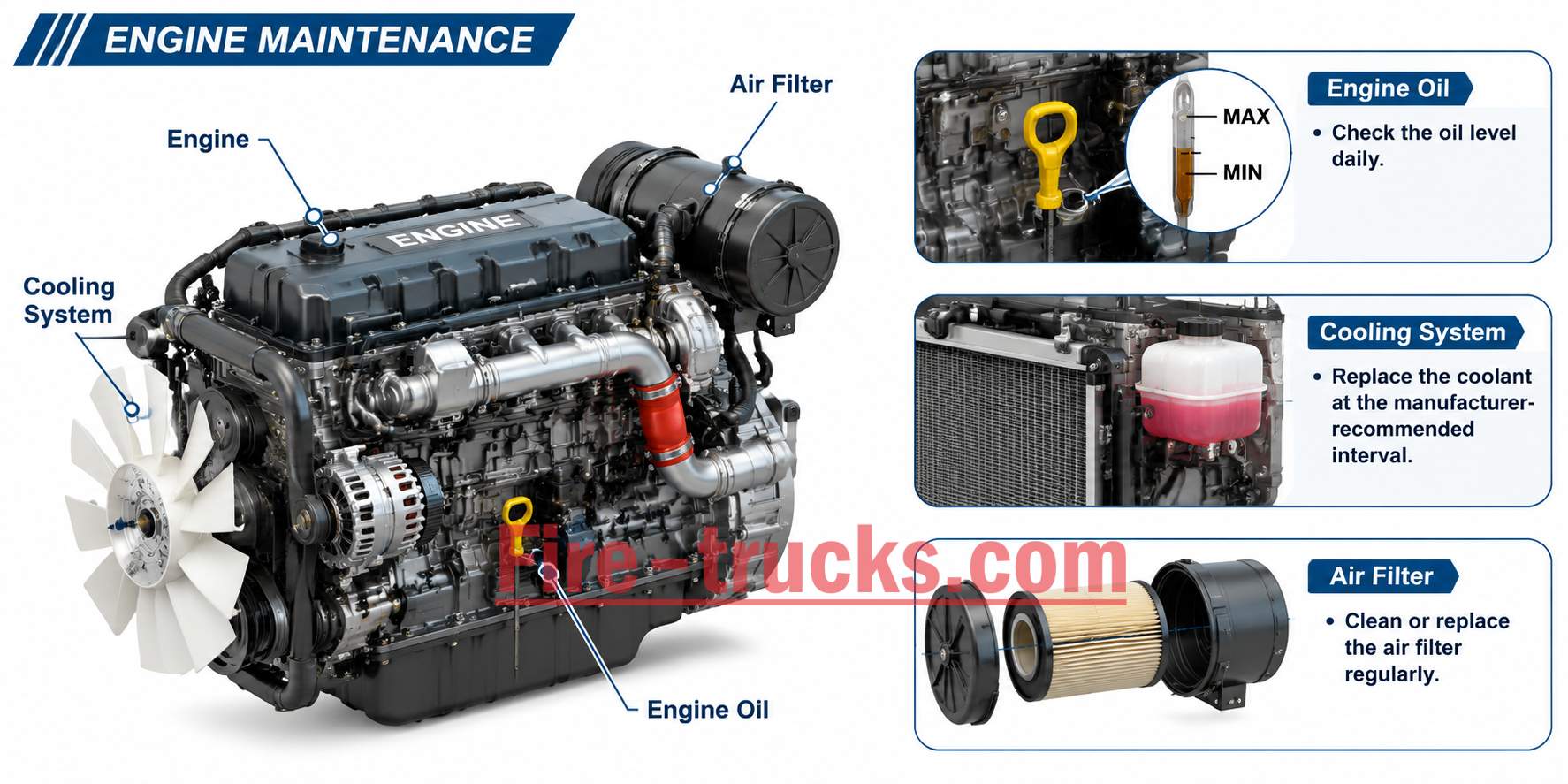
1. Engine maintenance
Focus: Engine oil, cooling system, air filter.
Action: Check engine oil level daily; change coolant at manufacturer intervals; clean or replace air filter regularly.
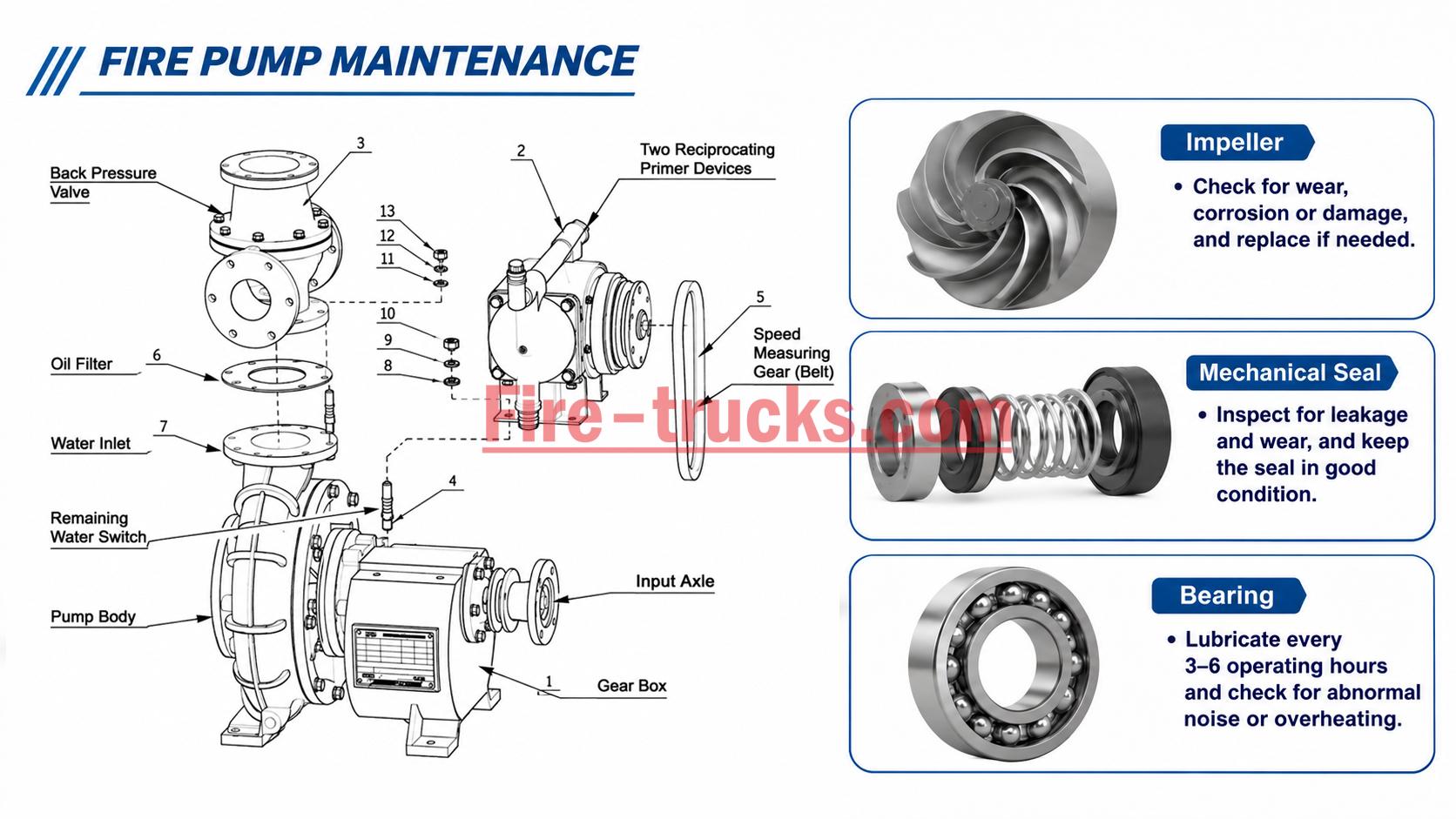
2. Fire pump maintenance
Focus: Pump body, mechanical seal, bearings.
Operation: Lubricate rotating parts every 3-6 hours of operation; never let the water pump run dry; rinse with clean water after use.
3. Water tank maintenance
Focus: Corrosion, welds, internal wave shielding.
Operation: Check whether there is internal corrosion every 6 months; flush and clean; check whether the welds of the wave protection plate are cracked.
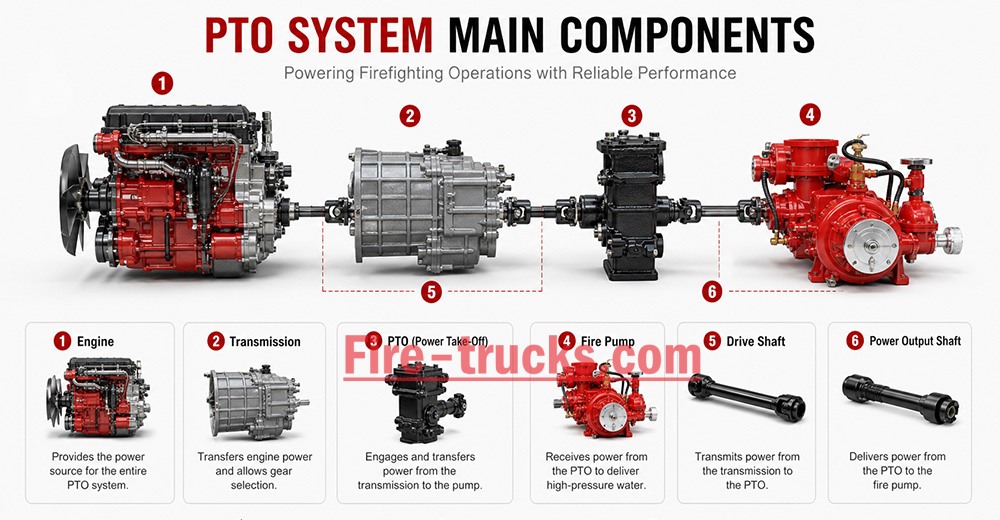
4. PTO Maintenance
Focus: PTO engagement, drive shaft, lubrication.
Operation: Check for abnormal noise when engaging; lubricate drive shaft bearings; check for loose bolts.
5. Valve and pipeline maintenance
Focus: Valves, pipelines, seals.
Operation: Operate all valves monthly to prevent sticking; check seals for leaks; check pipelines for corrosion.
6. Electrical system maintenance
Focus: Wiring, control panels, sensors.
Action: Check wiring for wear; test control panel functionality; clean and protect sensors.
» IV. Fire Truck Maintenance Workflow: From Daily Inspection to Periodic Servicing
Maintenance is not a single action but an ongoing workflow. This five-step process ensures the vehicle is ready for combat at all times.
1. Daily inspection: Check the engine, tires, brakes and fire pump before leaving the vehicle and after returning to the team.
2. Functional test: Test whether the fire pump, water diversion system and valves are working properly.
3. Regular maintenance: Carry out lubrication, cleaning and component inspection at specified intervals.
4. Performance evaluation: Measure pump pressure, flow and overall operating conditions.
5. Maintenance records: Record failures, repairs and parts replacement for traceability.
What Are the Warning Signs of an Aging Fire Truck?
Inspection of actual component damage can reveal when a fire engine is nearing the end of its useful life.
Pay attention to observe:
Chassis: Rust perforations, cracked welds, or frame deformation.
Fire Pump: Mechanical seal wear, excessive bearing noise, or pressure drop.
Tank: Internal corrosion, peeling coating, or breakage.
Pipeline: Pipeline corrosion or leakage, valve stuck.
Electrical: Worn wiring, faulty control panel, failed sensor.
» Ⅴ. How to Choose a Fire Truck With a Longer Service Life?
Chassis Selection: Choose a chassis with a proven track record and strong corrosion protection.
➤ Fire Pump Manufacturing and Testing: Make sure the pump is tested for flow, pressure and durability.
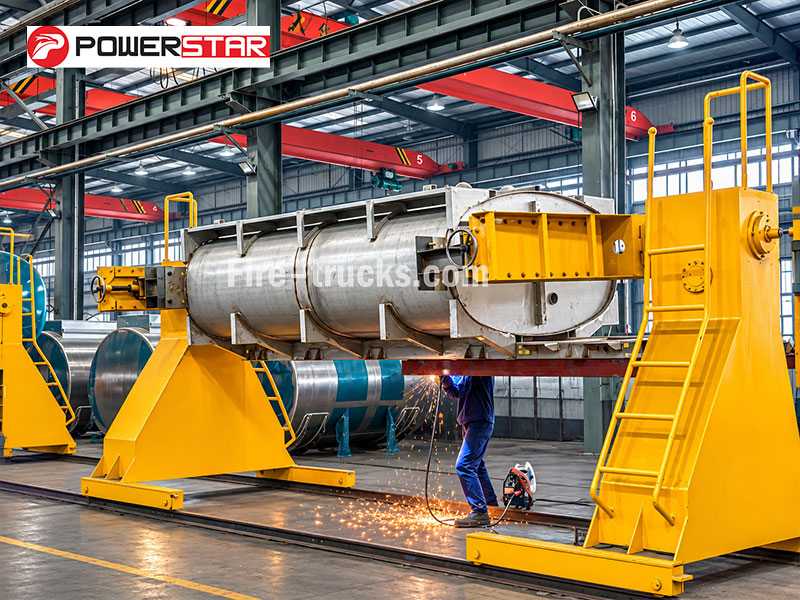
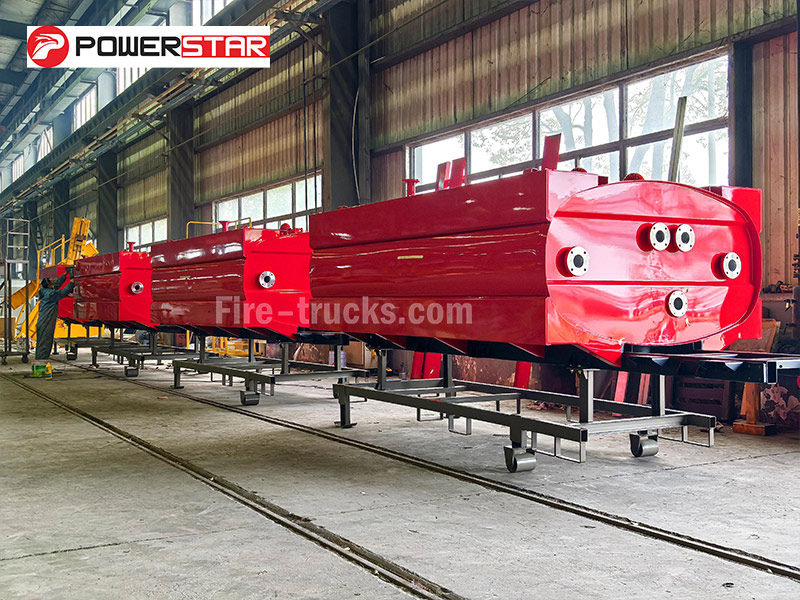
➤ Tank Welding and Anti-Corrosion: Find high quality welding and anti-corrosion coatings.
➤ Factory Testing: Confirm that the complete vehicle has been tested before delivery.
➤ After-Sales and Parts Supply: Verify that the manufacturer provides long-term parts support and service.
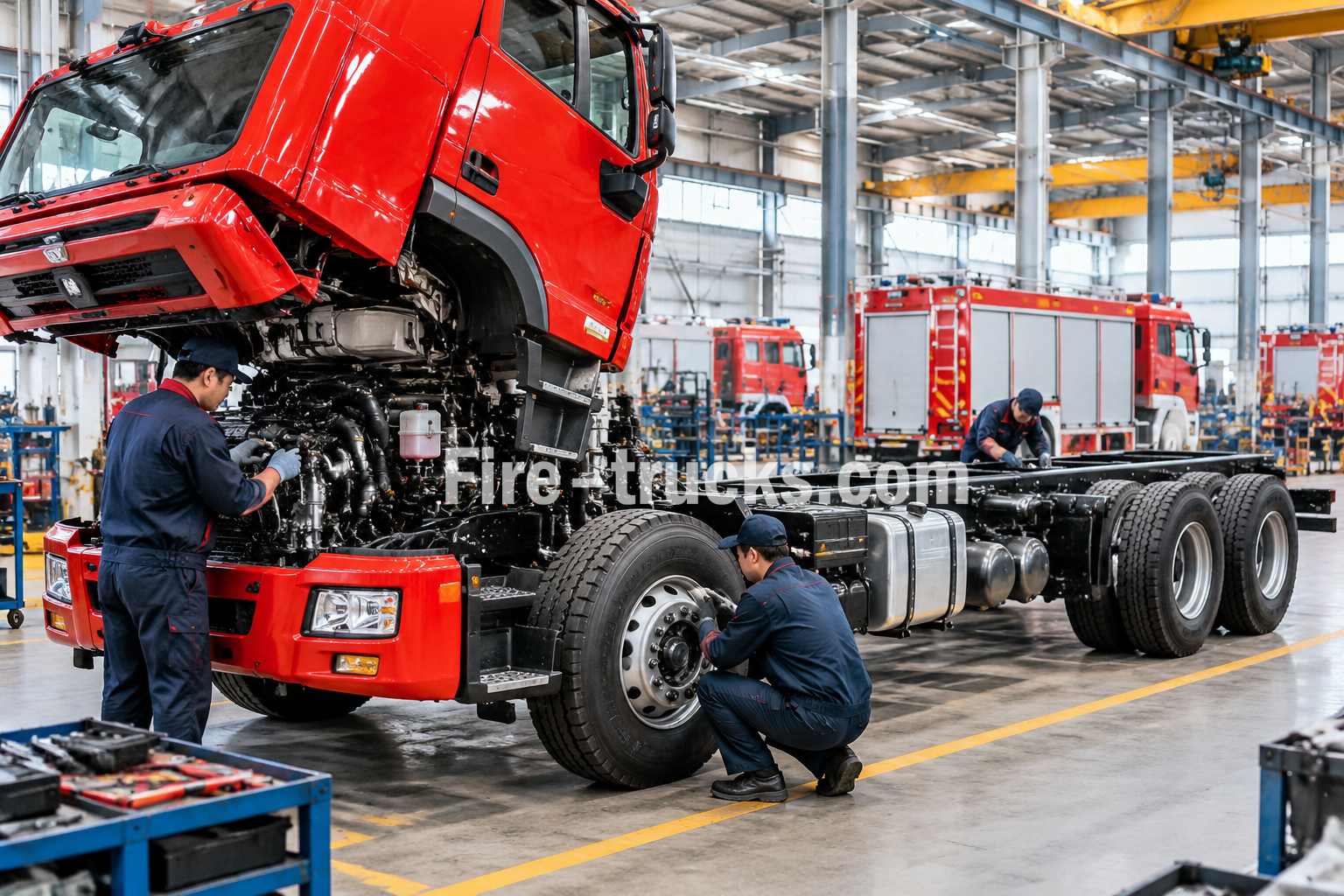
Tank fabrication and precision welding at the FIRE TRUCKS manufacturing facility:
» Ⅵ. Frequently Asked Questions (FAQ) ?
Q1: Is the 15-year retirement rule mandatory by law?
A: No. The 2015/25 guidance is in the appendix to NFPA 1900 and is not mandatory in the text. Local regulations may vary.
Q2: Can a fire truck be used for more than 25 years?
A: Yes. With careful maintenance and a solid chassis, the vehicle can run for more than 25 years. Limiting factors are often parts availability, structural corrosion and safety compliance.
Q3: Which maintenance task has the greatest impact?
A: Routine inspection and timely correction of minor problems. The most common causes of premature failure are delayed maintenance, running pumps dry, and winter freeze damage.
Q4: When is renovation more appropriate than replacement?
A: When the chassis and major systems are in good condition, but the body, electrical systems or equipment are outdated. Renovation can extend the life of a new fire truck by 5-10 years at a fraction of the cost of a new fire truck.
» VII. Summary
The service life of a fire truck is determined by component quality, working conditions and maintenance discipline. The 15-year first-line/25-year maximum guidance provides a planning framework, but actual life depends on the quality of maintenance. For fleet managers, a practical approach is to plan replacements in 15–20 years while maintaining each fire truck to the highest standards; for purchasers, choosing a fire truck with a solid chassis, high-quality water pumps and strong after-sales support is the first step towards a longer service life.


Vous pouvez être intéressé par les informations suivantes
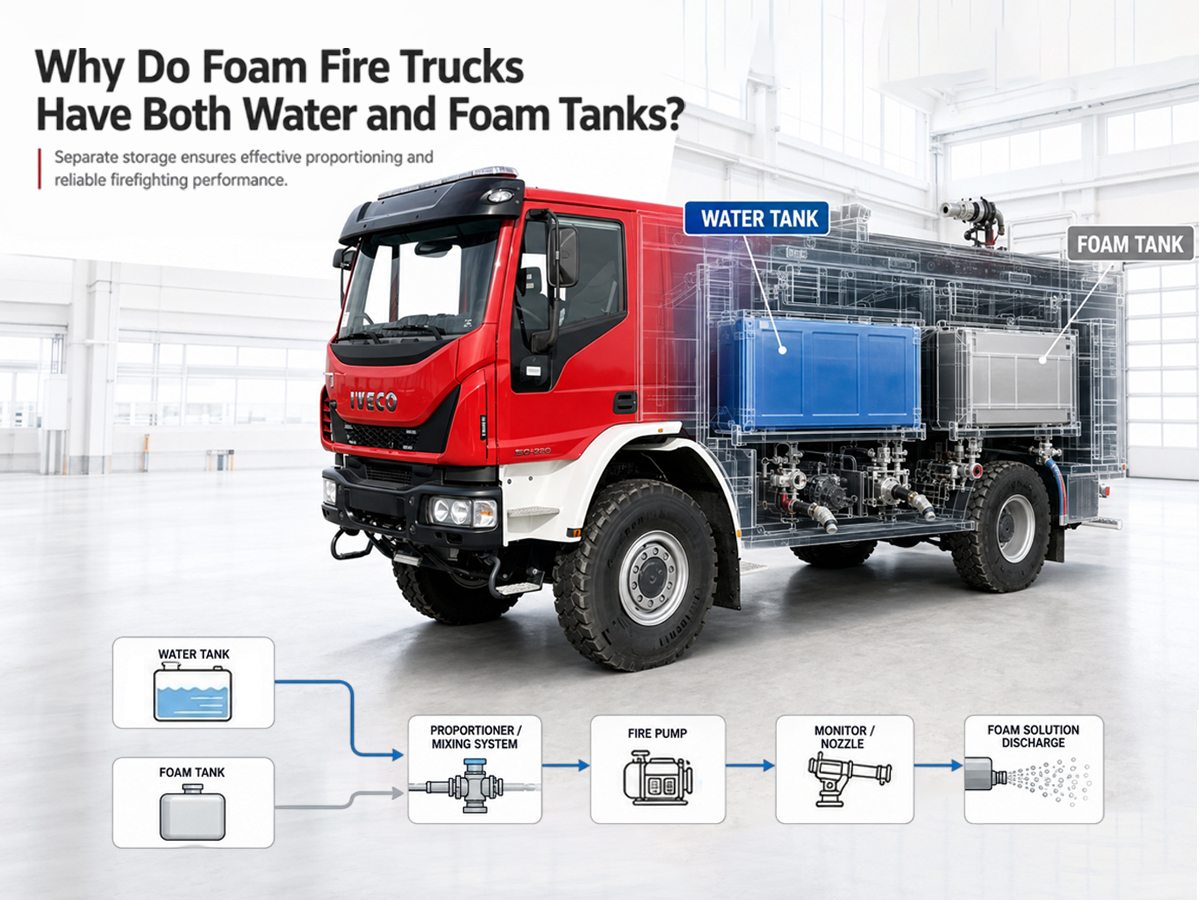
Les camions de pompiers à mousse combinent un réservoir dédié au concentré de mousse avec un réservoir d'eau séparé et un système de dosage précis. Ils utilisent un système de dosage pour introduire le concentré de mousse dans le jet d'eau à une concentration spécifiée, généralement 1 %, 3 % ou 6 %, en fonction du concentré de mousse et de l'application de lutte contre l'incendie.double réservoirLa conception permet aux pompiers d'utiliser uniquement de l'eau lorsque la mousse n'est pas nécessaire et d'introduire du concentré de mousse uniquement en cas de besoin. Cela améliore la flexibilité opérationnelle, contribue à maîtriser la consommation de mousse et permet de configurer le système d'extinction en fonction des différents risques d'incendie. Le principe de fonctionnement et la technologie clé des camions de pompiers à mousse, notamment la présence de réservoirs d'eau et de mousse, suscitent l'intérêt de nombreux clients. Découvrons-le ensemble. Réponse rapide : Les camions de pompiers à mousse utilisent généralement des réservoirs séparés pour l'eau et le concentré de mousse, car ces deux liquides sont nécessaires en proportions différentes et sont destinés à être mélangés pendant l'intervention plutôt que stockés sous forme de solution prémélangée pendant de longues périodes. Le réservoir d'eau fournit l'approvisionnement principal en eau, tandis que le réservoir de mousse stocke l'agent moussant concentré. Un système de dosage contrôle la quantité de concentré injectée dans le jet d'eau, permettant ainsi au camion de passer du mode d'extinction à l'eau seule au mode à la mousse. JE. Quels sont les principaux composants d'un camion de pompiers à mousse ? 1. Réservoir d'eau Construction résistante à la corrosion (acier au carbone avec revêtement anticorrosion ou acier inoxydable), capacités de 4 000 à 6 000 litres. Équipé de chicanes pour réduire les à-coups de liquide lors du déplacement du véhicule et de supports flexibles pour absorber les mouvements du châssis sur terrain accidenté. 2. Réservoir de concentré de mousse Construction en acier inoxydable pour résister aux attaques chimiques des concentrés de mousse active, capacité typique de 500 à 2 000 litres. Selon le type de concentré de mousse et la conception du système, le réservoir peut intégrer des dispositifs tels que des systèmes de circulation ou d'agitation pour aider à maintenir l'état du concentré pendant le stockage. 3. Système de dosage de mousse Un système de dosage qui prélève le concentré de mousse à partir du réservoir dédié.mousseLe concentré de mousse est stocké dans un réservoir et introduit dans le flux d'eau à une concentration spécifiée. Selon le type de concentré et la conception du système, le dosage peut être réalisé par pression équilibrée, par pompe ou par effet Venturi. 4. Pompe à incendie La pompe à incendie est la source d'énergie de l'ensemble du système de mousse. Elle aspire l'eau du réservoir et la pressurise au débit et à la pression requ...
Détails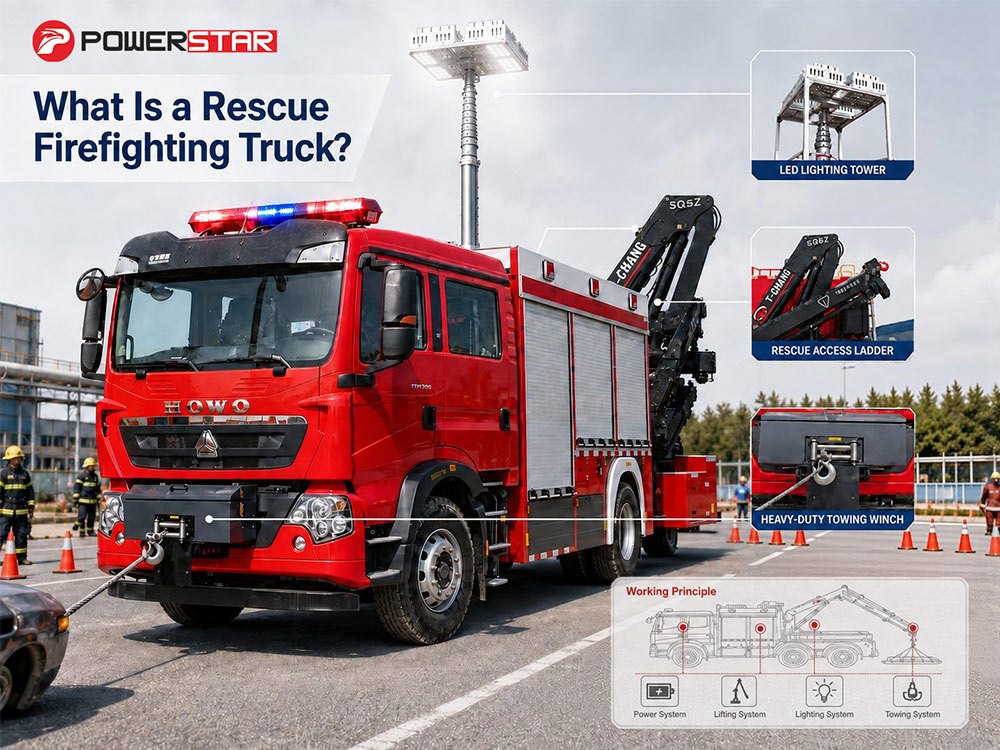
Un camion de pompiers de secours est un véhicule d'urgence spécialisé conçu pour effectuer à la fois des opérations de lutte contre les incendies et de sauvetage. Contrairement aux camions de pompiers classiques qui se concentrent principalement sur l'extinction des incendies,camions de pompiers de secourscombiner l'équipement de lutte contre l'incendie avec des outils de sauvetage, des appareils de levage et de hissage, des outils de coupe et d'épandage, des treuils, des générateurs et des systèmes d'éclairage. Cet article explique ce qu'est un camion de pompiers de secours, en quoi il diffère des autres véhicules d'incendie, quel équipement il transporte et quand il est déployé. I. Qu'est-ce qu'un camion de pompiers de secours ? Un camion de sauvetage et de lutte contre les incendies est un véhicule d'urgence polyvalent qui combine des capacités de lutte contre les incendies et un équipement de sauvetage spécialisé. Il est principalement utilisé pour assurer une capacité d'intervention d'urgence complète lors d'incidents impliquant des personnes, des véhicules, des bâtiments ou des installations industrielles. Selon leur configuration, les camions de secours incendie peuvent être équipés d'une grande variété d'outils de sauvetage et de systèmes d'extinction. Le choix de l'équipement dépend de l'utilisation prévue du véhicule. Par exemple, un véhicule configuré pour le sauvetage en milieu urbain peut avoir un agencement d'équipement différent de celui d'un véhicule conçu pour le sauvetage industriel, les interventions après un séisme ou le dépannage suite à un accident de la route. II. Quel équipement transporte un camion de pompiers de secours ? L'équipement embarqué sur un camion de pompiers de secours dépend de la conception du véhicule et de son utilisation prévue. Cependant, sur la plupart des modèles, il peut être classé en plusieurs catégories principales : matériel de lutte contre l'incendie, outils de sauvetage, matériel électrique, matériel d'éclairage, dispositifs de levage et de remorquage, et équipements de protection individuelle. 1. Équipement de lutte contre l'incendie Le matériel de lutte contre l'incendie peut comprendre des extincteurs, des tuyaux d'incendie, des lances à incendie, des pompes portables, des réservoirs d'eau, des systèmes d'extinction d'incendie à mousse, des canons à incendie et d'autres outils de suppression. 2. Outils de sauvetage hydrauliques Les outils de désincarcération hydrauliques sont couramment utilisés lors des opérations de secours en cas d'accident de la route pour découper, écarter ou soulever les structures endommagées des véhicules. Parmi les équipements courants, on trouve les pinces coupantes hydrauliques, les écarteurs hydrauliques et les vérins hydrauliques. 3. Générateur électrique Les générateurs fournissent l'énergie électrique nécessaire aux outils de sauvetage, aux équipements d'éclairage, aux appareils de communication et autres équipements lorsqu'aucune source d'a...
Détails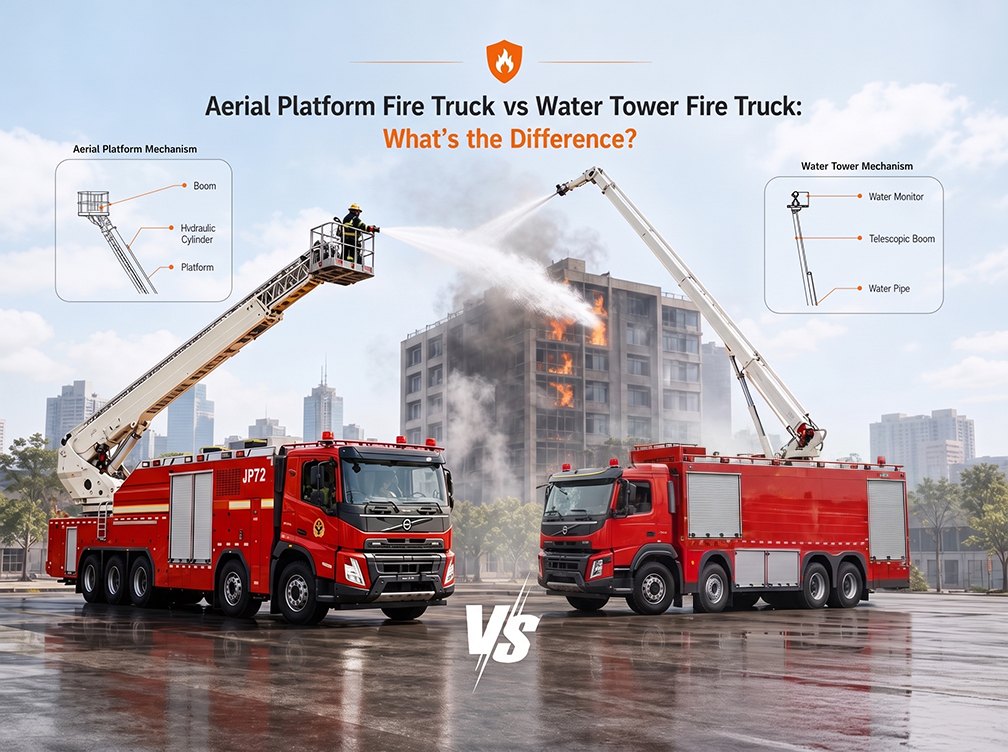
Lorsqu'il s'agit de combattre des incendies dans des immeubles de grande hauteur, des installations industrielles ou de grands entrepôts, les camions de pompiers aériens sont indispensables. Mais parmi les différents types d'engins aériens, deux prêtent souvent à confusion : lecamion de pompiers à plateforme aérienne et lecamion de pompiers à tour d'eau. Bien qu'ils puissent sembler similaires au premier coup d'œil — tous deux disposent de bras hydrauliques et sont conçus pour la lutte contre les incendies en hauteur — ils remplissent des missions fondamentalement différentes. Cet article présente les principales différences entre ces deux types de véhicules, aidant les professionnels des services d'incendie, les responsables des achats et les distributeurs d'équipements à prendre des décisions éclairées en fonction des besoins opérationnels. I. Que sont les camions à plateforme aérienne ? Selon la norme nationale chinoise GB 7956.12-2015, les deux véhicules appartiennent à la catégorie desvéhicules aériens de lutte contre les incendies— des véhicules équipés de bras élévateurs, de tourelles rotatives et d'équipements de lutte contre l'incendie pour les opérations en hauteur. Cependant, leurs définitions spécifiques mettent en évidence une distinction essentielle. Camion de pompiers à plateforme aérienne Un camion de pompiers à plateforme aérienne est équipé d'un bras combiné pliant ou pliant-télescopique, d'une plateforme pour personnel, d'une tourelle rotative et de dispositifs de lutte contre l'incendie. La caractéristique distinctive est laplateforme de travail (nacelle) à l'extrémité du bras, où les pompiers peuvent se tenir pour effectuer des opérations de sauvetage et de lutte contre l'incendie. Caractéristiques principales :• Équipé d'une plateforme pouvant transporter750 livres à plus de 1 500 livres de personnel et d'équipement• Conçu à la fois pour lesauvetage et la lutte contre l'incendie— les pompiers peuvent intervenir directement depuis la plateforme• La plateforme peut être utilisée avec des dispositifs de contrôle de descente, des treuils hydrauliques ou des toboggans de sauvetage• Une portée horizontale plus large et une plus grande amplitude de travail par rapport aux tours d'eau II. Que sont les camions de pompiers à tour d'eau ? Un camion de pompiers à tour d'eau est équipé d'un bras combiné pliant ou pliant-télescopique, d'une tourelle rotative et de dispositifs de lutte contre l'incendie —sans plateforme pour personnel. À la place, un canon à eau (lance d'incendie) est monté à l'extrémité du bras et peut être commandé à distance depuis le sol. Caractéristiques principales :• Aucune plateforme pour personnel— les pompiers interviennent depuis le sol via une commande à distance• Axé exclusivement sur l'extinction des incendies en hauteur, et non sur le sauvetage• Fournit un débit d’eau exceptionnellement élevé—dépassant 2 000 gallons par minutesur de nombreux modèles industriels• Conçu pour la protection incendie industri...
Détails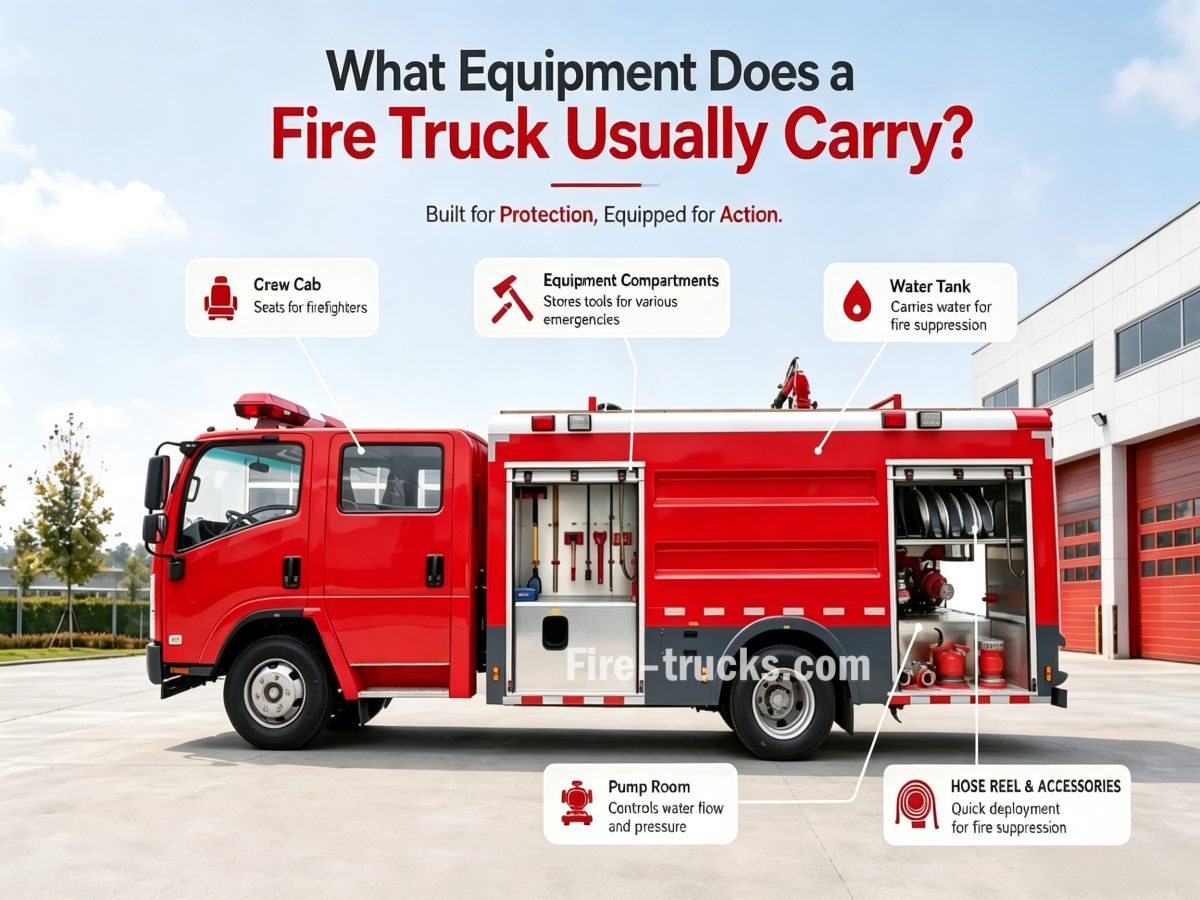
Un camion de pompiers transporte généralement des équipements de lutte contre l'incendie, d'approvisionnement en eau, de sauvetage et de protection de sécurité. Les équipements courants comprennent les pompes à incendie, les réservoirs d'eau, les tuyaux d'incendie, les lances d'incendie, les canons à eau, les vannes, les échelles d'incendie, les outils de sauvetage, les équipements de protection et les dispositifs de communication. Cet article détaille systématiquement la classification, les fonctions et les considérations de sélection des équipements standard decamion de pompierséquipements, aidant les professionnels des achats et les utilisateurs finaux à acquérir une compréhension complète des configurations des véhicules d'incendie. I. Classification des équipements des camions de pompiers 1. Équipements de lutte contre l'incendie— Outils essentiels pour l'extinction directe des incendies, notamment les lances d'incendie, les canons à eau, les tuyaux d'incendie, les diviseurs d'eau et les adaptateurs. 2. Équipements de sauvetage et de franchissement— Outils permettant de créer des voies d'accès pour les opérations de sauvetage et de lutte contre l'incendie, notamment les outils hydrauliques de sauvetage, les haches d'incendie, les leviers, les pieds-de-biche, les scies à tronçonner et les tronçonneuses. 3. Équipements de sauvetage et de protection de la vie— Équipements destinés à la recherche, au transport et à la protection du personnel, notamment les brancards, les cordes de sauvetage, les crochets de sécurité, les dispositifs de contrôle de descente, les appareils respiratoires autonomes (ARA) et les bouteilles d'air de rechange. 4. Équipements d'évacuation des fumées et d'éclairage— Équipements destinés à améliorer les conditions sur le lieu d'incendie, notamment les extracteurs de fumée, les mâts d'éclairage mobiles et les projecteurs portables de recherche à haute intensité. 5. Équipements de protection individuelle (EPI)— Équipements destinés à protéger la sécurité des pompiers, notamment les casques, les vêtements de protection pour la lutte contre les incendies structurels, les gants, les bottes et les ceintures de sécurité. 6. Équipements de communication et de reconnaissance— Équipements destinés à la collecte d'informations sur le lieu d'incendie et à la coordination du commandement, notamment les radios bidirectionnelles, les caméras thermiques et les détecteurs de gaz toxiques. II. Équipements de lutte contre l'incendie sur les camions de pompiers 1. Pompe à incendie La pompe à incendie est la source d'énergie de toutes les opérations de lutte contre l'incendie. Elle met mécaniquement l'eau sous pression, lui donnant une énergie cinétique suffisante pour accomplir le processus complet « aspiration → pressurisation → acheminement → décharge ». Spécifications typiques des pompes à incendie : •Pompe à incendie standard pression (type CB10/30) :Débit ≥30 L/s, pression nominale 1,0 MPa, installation montée à l'arrière. Convient aux ...
Détails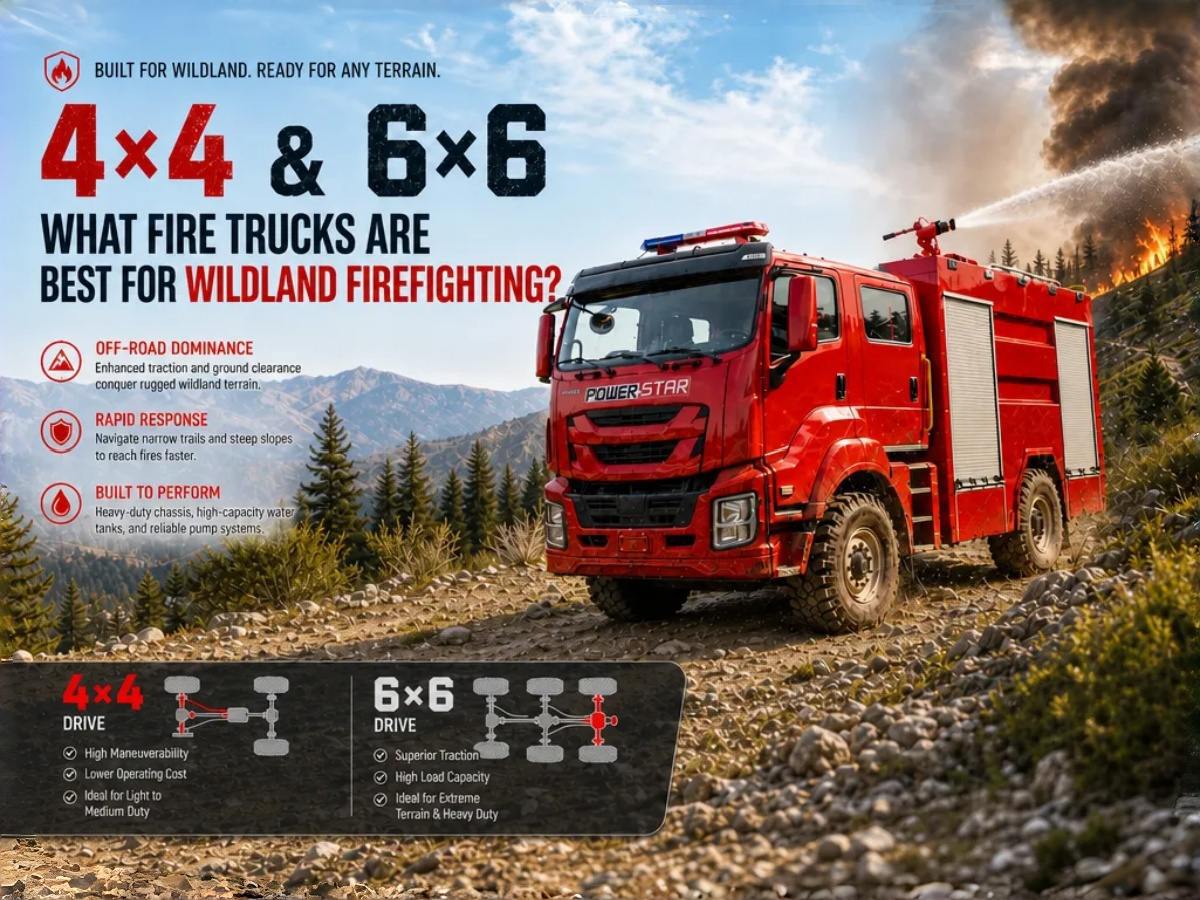
La lutte contre les incendies de végétation présente des défis fondamentalement différents de ceux de la lutte contre les incendies de structures. Dans les forêts isolées, les prairies et les terrains montagneux, les camions de pompiers doivent emprunter des sentiers étroits, gravir des pentes abruptes et fonctionner loin des bouches d'incendie ou des sources d'eau. Le choix du bon camion de lutte contre les incendies est une décision stratégique qui a un impact direct sur le temps d'intervention, la sécurité des équipes et l'efficacité de l'extinction des incendies. Cet article fournit une analyse complète des types de camions de pompiers les plus adaptés à la lutte contre les incendies de végétation, de leurs caractéristiques principales et des méthodes de sélection, afin de vous aider à prendre la bonne décision en fonction de vos besoins opérationnels spécifiques. Réponse rapide Les incendies de végétation se caractérisent par de vastes zones en feu, des terrains complexes, des sources d'eau limitées et de mauvaises conditions routières. Il n'existe donc pas un seul camion de pompiers capable de gérer tous les scénarios d'incendie de forêt. En général, la lutte contre les incendies de végétation utilise principalement les types de camions de pompiers suivants : • Camions légers de lutte contre les incendies de végétation : pour l'accès aux routes forestières et les interventions rapides• Camions 4×4 tout-terrain de lutte contre les incendies de végétation : pour les terrains montagneux et vallonnés• Camions 6×6 de lutte contre les incendies de végétation : pour les incendies de forêt de grande ampleur et les opérations prolongées• Camions-citernes : pour l'approvisionnement continu en eau et le soutien• Camions d'incendie à mousse : pour les installations pétrolières, les équipements forestiers ou les incendies spéciaux• Véhicules de secours : pour les communications, l'éclairage, le franchissement d'obstacles et le soutien logistique I. Pourquoi les incendies de végétation nécessitent-ils des camions de pompiers spécialisés ? Les incendies de végétation diffèrent fondamentalement des incendies de structures de plusieurs façons essentielles : Caractéristiques principales des incendies de végétation :• Grandes zones d'incendie couvrant des hectares de terrain• Changements rapides de direction du vent• Terrain complexe et accidenté• Accès limité ou inexistant aux bouches d'incendie ou aux sources d'eau• Routes forestières étroites et non pavées• Conditions de communication difficiles Les camions de pompiers urbains standard ne conviennent généralement pas à la lutte contre les incendies de végétation pour les raisons suivantes : •Absence de transmission 4×4 ou de quatre roues motrices pour les routes de montagne non pavées et les pentes abruptes ;•Leur taille plus importante et leur faible garde au sol les rendent susceptibles de rester bloqués sur les sentiers forestiers étroits et les terrains meubles ;•Les pompes urbaines privilégient un déb...
Détails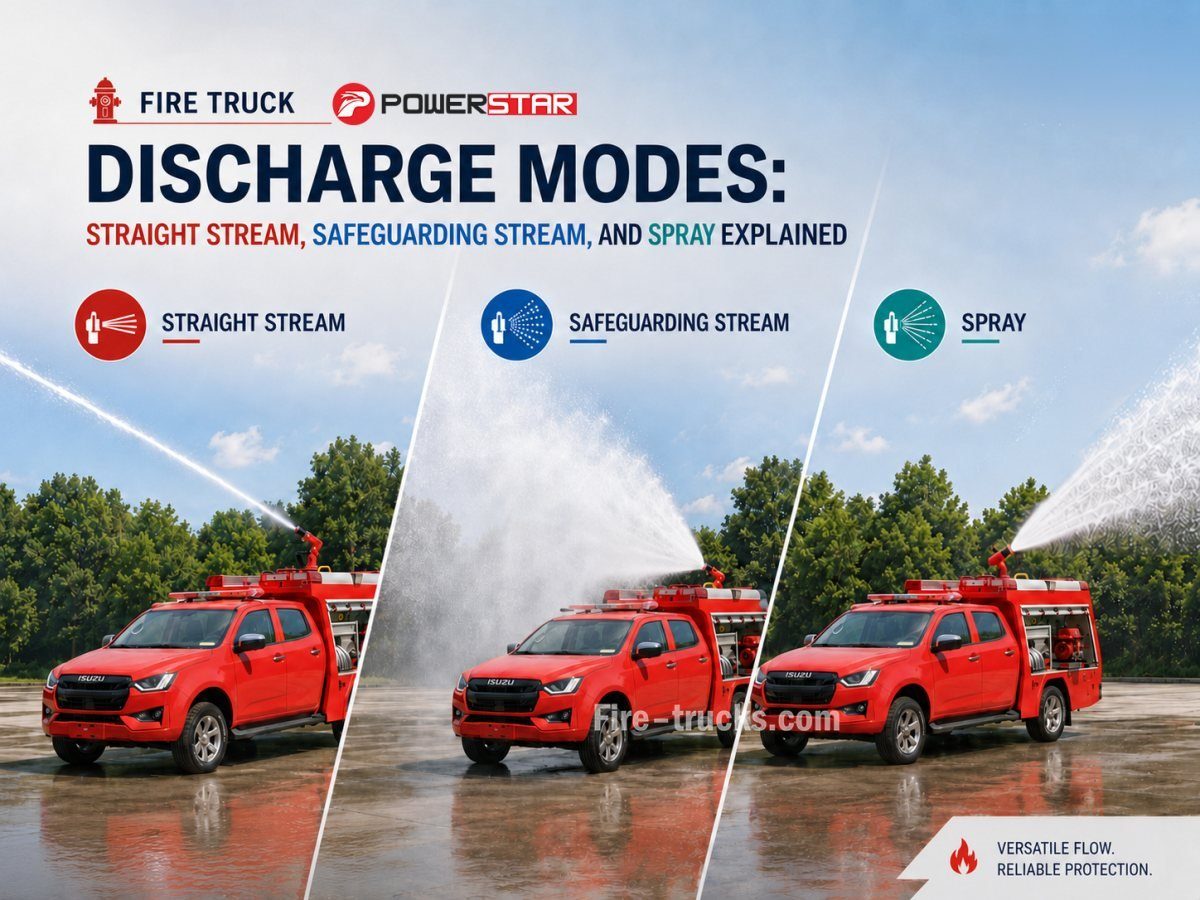
Dans les opérations de lutte contre l'incendie, la sélection du mode de jet détermine directement l'efficacité de l'extinction, la sécurité opérationnelle et l'efficacité du contrôle du feu. La plupart des gens ignorent quecamion de pompiersles lances peuvent basculer entre trois modes de jet principaux : jet droit, jet diffusé et jet de protection. Les différents modes varient considérablement en termes de forme d'écoulement, de portée, de force d'impact et de zone de couverture, et chacun correspond à des scénarios d'incendie applicables complètement différents. Cet article, basé sur les normes professionnelles d'exploitation de la lutte contre l'incendie, analyse de manière exhaustive les principes, les caractéristiques clés et les scénarios d'application des trois modes de jet, aidant nos clients à maîtriser systématiquement les techniques de décharge des camions de pompiers. I. Pourquoi les camions de pompiers ont-ils besoin de différents modes de jet ? Le jet droit, le jet diffusé et le jet de protection correspondent à trois mécanismes d'extinction différents : extinction par impact, étouffement par vaporisation et protection contre le rayonnement thermique. Les pompiers doivent changer de mode avec souplesse selon les conditions du site. Alors,pourquoi ne pouvons-nous pas utiliser un seul type de jet en permanence ? 1. La diversité des types d'incendie nécessite différentes formes d'agents extincteurs Les différents types d'incendie présentent des caractéristiques de combustion différentes, qui déterminent la méthode d'extinction appropriée : • Les incendies de matériaux solides de classe A nécessitent l'impact d'un jet droit pour désagréger les matériaux en combustion et pénétrer afin d'assurer un refroidissement interne ; • Les incendies de liquides de classe B ne peuvent pas utiliser l'impact d'un jet droit (qui provoque des éclaboussures et propage l'incendie), mais doivent utiliser un jet de protection ou un jet diffusé pour couvrir et diluer ; • Les incendies électriques sous tension de classe E ne peuvent utiliser qu'un jet diffusé, car les fines gouttelettes d'eau ne forment pas de trajet conducteur continu ; • Les incendies dans des espaces clos nécessitent un jet diffusé pour remplir tout l'espace, permettant l'extinction par absorption de chaleur lors de la vaporisation et étouffement. Aucun mode unique ne peut s'adapter à tous les types d'incendie. 2. Les différentes phases d'un même incendie nécessitent différentes approches tactiques Même pour un même incendie, les différentes phases nécessitent différents modes de jet : • Au stade initial, lorsque le feu est intense, un jet droit est nécessaire pour un impact à longue portée sur le foyer afin d'obtenir une suppression rapide ; • Pendant la progression, un jet de protection est nécessaire pour former une barrière de rideau d'eau afin de bloquer le rayonnement thermique et protéger le personnel ; • Avant d'entrer dans une pièce, un jet diffusé est nécessaire pour refroidir et...
Détails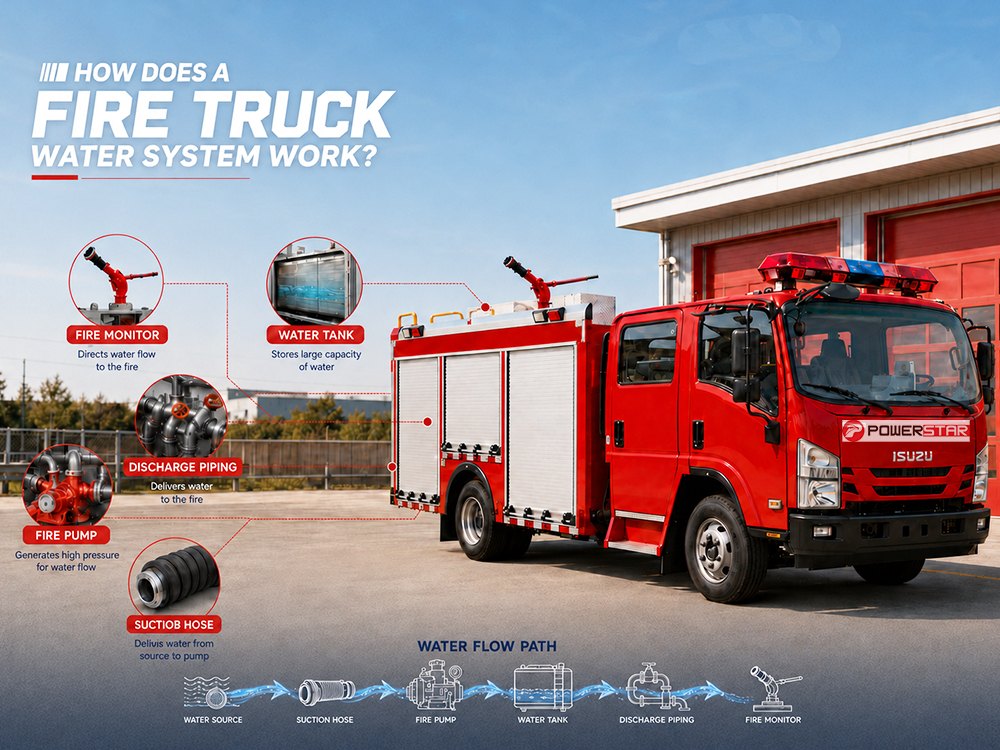
Le système de plomberie hydraulique d’un camion de pompiers est le cœur de chaque opération de lutte contre l’incendie. Il dirige avec précision l’eau depuis le réservoir ou une source externe à travers la pompe, les vannes et les tuyauteries afin de fournir de l’eau ou de la mousse à haute pression sur le lieu de l’incendie — qu’il s’agisse d’un feu dans un immeuble de grande hauteur au cœur d’une ville densément peuplée ou d’un incendie de réservoir de stockage pétrochimique dans une zone industrielle. Le camion de pompiers système de plomberie hydraulique se compose de plusieurs composants fonctionnant ensemble : pompe incendie, réservoir d’eau, tuyau d’aspiration, tuyauterie de refoulement, vannes, collecteur de division, collecteur de rassemblement, crépine, canon incendie, raccords de tuyaux, et plus encore. Le parcours complet du flux est : Réservoir d’eau → Tuyau d’aspiration → Crépine → Pompe incendie → Système de régulation de pression → Collecteur de refoulement → Vannes → Collecteur de division → Canon incendie / Raccords de tuyaux → Buse Cet article explique chaque composant du système de plomberie hydraulique et comment ils fonctionnent ensemble pour fournir de l’eau à la pression et au débit appropriés. I. Composants principaux du système de plomberie hydraulique Réservoir d’eau Stocke l’approvisionnement en eau embarqué. ● Capacité : Généralement 2 000 à 12 000 litres. ● Alimentation : Fournit de l’eau à la pompe par la tuyauterie d’admission. ● Caractéristiques : Cloisons anti-ballottement pour la stabilité du véhicule, crépine pour filtrer les débris et système d’amorçage pour l’aspiration depuis des sources d’eau naturelles. Pompe incendie Une pompe centrifuge entraînée par le moteur du camion via une prise de force (PTO) ; à un ou plusieurs étages, en fonte ou en bronze. ● Classes de pression: Disponibles avec des valeurs nominales standard de 0,8 MPa, 1,0 MPa, 1,2 MPa et 1,4 MPa, adaptées aux exigences courantes de la lutte contre l’incendie. ● Débits: De 1 200 à 6 000 L/min, avec des courbes de performance optimisées pour les opérations à haute pression comme pour celles nécessitant un grand volume d’eau. Vannes et tuyauteries Un réseau de tuyaux et de vannes qui contrôle la direction et le volume du débit d’eau. ● Vanne d’admission: Relie la pompe aux sources d’eau externes (borne d’incendie ou point d’aspiration) ● Vanne réservoir-pompe: Permet à la pompe de puiser directement l’eau du réservoir embarqué ● Vannes de refoulement: Contrôlent le débit d’eau vers les tuyaux et les buses II. Fonctionnement du système de plomberie hydraulique d’un camion de pompiers Étape 1 : Prise d’eau et amorçage L’eau entre dans le système depuis le réservoir embarqué, une borne d’incendie ou des sources d’eau naturelles (lacs, rivières, étangs). Lors d’une aspiration depuis des sources naturelles, le système d’amorçage (pompe à vide) élimine l’air du tuyau d’aspiration, créant un vide qui permet à la pression atmosphérique de pousser l’eau...
Détails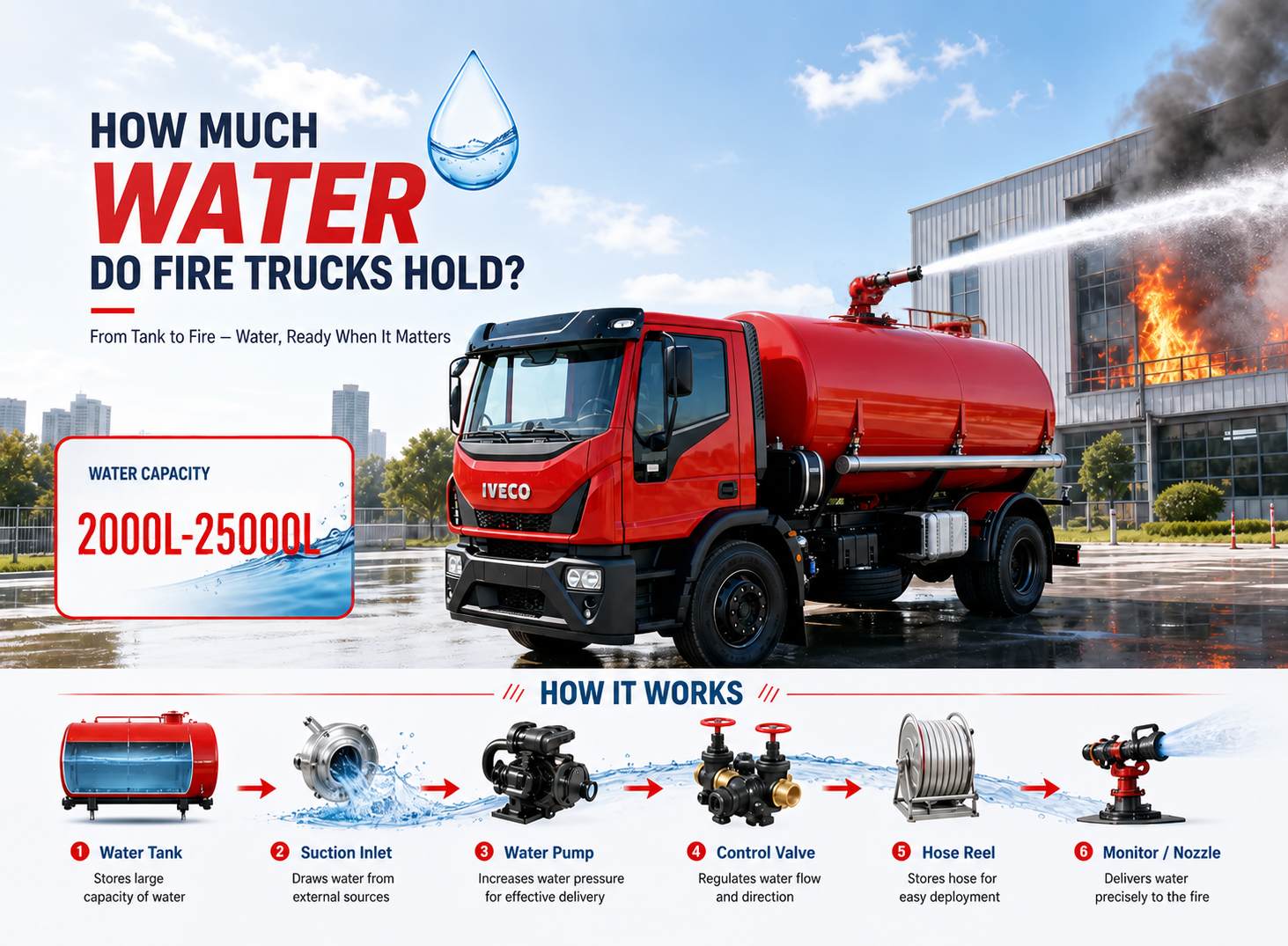
Quelle quantité d’eau un camion de pompiers peut-il transporter ? C’est l’une des premières questions auxquelles nos clients sont confrontés lorsqu’ils choisissent un camion de pompiers. Il n’existe pas de nombre fixe unique : cela dépend du type de véhicule, de la capacité du châssis, de la conception prévue et des réglementations régionales, allant des unités légères de 2 000 litres aux camions de pompiers industriels de 25 000 litres. Cependant, un réservoir plus grand ne signifie pas toujours de meilleures performances ;véhicule de lutte contre l’incendie la capacité du réservoir d’eau doit être correctement adaptée au débit de la pompe, au débit de décharge du canon et à la capacité du châssis afin d’obtenir des résultats efficaces de lutte contre l’incendie. Cet article commence par les principes fondamentaux de la capacité des réservoirs d’eau des camions de pompiers, analyse les plages de stockage typiques pour différents types de véhicules, examine les principaux facteurs qui influencent la conception des réservoirs et fournit des conseils pratiques pour l’achat. Points clés à retenir : La capacité du réservoir d’eau d’un camion de pompiers varie généralement de 2 000 à 25 000 litres Les différents types de camions de pompiers ont des capacités de réservoir différentes Un réservoir plus grand ne signifie pas une meilleure capacité de lutte contre l’incendie La capacité du réservoir doit être adaptée au débit de la pompe, au débit du canon et à la capacité du châssis La lutte contre les incendies industriels nécessite généralement de grands réservoirs, tandis que la lutte contre les incendies municipaux privilégie la maniabilité » I. Trois types de base de réservoirs d’eau pour camions de pompiers Camions d’intervention avec pompe :Ce sont les camions de pompiers municipaux les plus courants. Ils dépendent principalement des bornes d’incendie pour l’approvisionnement en eau et transportent environ 1 900 à 3 800 litres d’eau embarquée pour l’attaque initiale. Le cœur de ces véhicules est la pompe, et non le réservoir : ils sont conçus pour fournir de l’eau sous pression une fois raccordés à une borne d’incendie. Camions-citernes (ravitailleurs en eau) :Ces véhicules sont dédiés au transport de grands volumes d’eau, avec des capacités de réservoir dépassant généralement 11 400 litres. Ils jouent un rôle essentiel dans les zones rurales et isolées où les bornes d’incendie ne sont pas disponibles, en transportant l’eau des sources d’approvisionnement jusqu’au lieu de l’incendie pour que les camions-pompes puissent l’utiliser. Camions pompe-citerne :Ces véhicules combinent les fonctions de pompage et de transport d’eau en une seule unité. Ils peuvent à la fois projeter de l’eau pour la lutte contre l’incendie et approvisionner d’autres véhicules. Les capacités de réservoir varient généralement de 5 700 à 11 400 litres, ce qui en fait une solution polyvalente pour les services d’incendie. » II. Quelle quantité d’eau les différents types de cami...
Détails
Veuillez lire la suite, restez informés, abonnez-vous, et n'hésitez pas à nous faire part de vos commentaires.

 Network IPv6 pris en charge

 français
 English
 Deutsch
 русский
 italiano
 español
 português
 Nederlands
 العربية
 日本語
 한국의
 Türkçe
 Melayu
 ไทย
 Tiếng Việt
 Indonesia
 中文
 қазақ
 Filipino
 မြန်မာ
 српски